


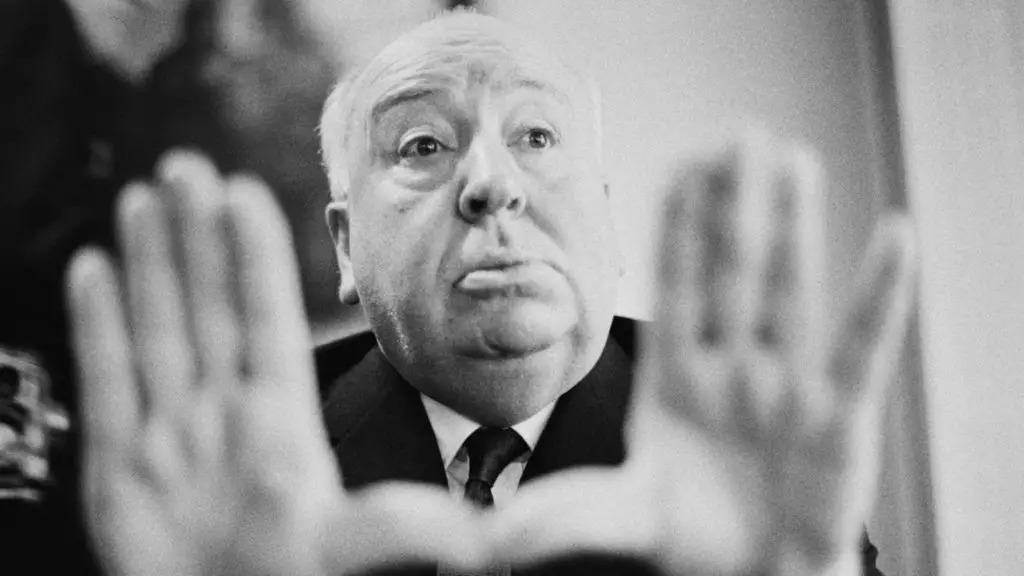
Few filmmakers understood the psychology of the camera as well as Alfred Hitchcock.
Hitchcock believed suspense was not created by plot twists alone, but by carefully controlling what the audience sees—and when they see it. He famously explained the difference between surprise and suspense this way:
“If a bomb explodes under a table, the audience experiences ten seconds of surprise. But if the audience knows the bomb is under the table and the characters do not, you get ten minutes of suspense.”
Nearly every technique Hitchcock used was designed to exploit this principle. By guiding the viewer’s eye with precise camera movements and carefully structured editing, he transformed ordinary shots into powerful storytelling tools.
Across films like Rear Window, Vertigo, The Birds, and Psycho, Hitchcock refined a visual language that allowed him to control the emotional rhythm of a scene with extraordinary precision.
These techniques were not simply stylistic flourishes. They were part of a system designed to guide the audience’s attention and manipulate suspense.
The “Double Take” Tracking Shot
One of Alfred Hitchcock’s favorite methods for directing audience attention was the tracking reveal.
The camera moves toward an object—often something important in the story—before shifting to either another object or a character’s reaction.
This creates an immediate psychological connection between the two.
Hitchcock used variations of this technique in films like Vertigo and Rear Window, where the camera glides toward something suspicious before cutting or panning to the character absorbing the information.
The effect is deliberate and unmistakable. Hitchcock is guiding the viewer’s eye, ensuring that the audience recognizes the connection at the same moment as the character.
In the clip from Vertigo below, James Stewart’s character, Scottie Ferguson, spies on Madeleine Elster (played by Kim Novak). The “double take” occurs twice. First, the camera zooms in on Madeleine’s bouquet of flowers before revealing the identical bouquet held by the woman in the painting. A second move links Madeleine’s distinctive hairstyle to the hairstyle of the painted woman.
By visually connecting these details, Hitchcock plants the central mystery of the scene: why does Madeleine appear to be mirroring a woman from the past?

The Point-of-View Shot
Few directors used the POV shot as aggressively as Alfred Hitchcock.
In Rear Window, the entire narrative structure is built around voyeurism. For much of the film, we see through the telephoto lens of protagonist L.B. Jefferies (played by James Stewart), a photographer confined to his apartment with a broken leg. From his window he spies on neighbors across the courtyard, observing their daily routines through a camera lens or a pair of binoculars.
One day, however, Jefferies believes he has witnessed circumstantial evidence of a murder. What begins as idle curiosity slowly transforms into an amateur investigation conducted entirely through surveillance of the surrounding apartments.

Hitchcock repeatedly cuts between:
-
Jefferies looking
-
What he sees
-
His reaction
The telephoto lens compresses space, making distant apartments appear unnervingly close. Many of these shots are framed to resemble binoculars or camera lenses, reinforcing the sensation that the audience is watching through Jefferies’ eyes.
The result is one of Hitchcock’s central themes: the audience becomes a voyeur.
We are not simply watching a film.
We are spying.
And because the mystery unfolds entirely through Jefferies’ perspective, the audience is drawn into the investigation itself. As the clues accumulate, viewers find themselves doing exactly what Jefferies is doing—studying the details, questioning what they have seen, and trying to determine whether a murder has actually taken place.
It is this shared act of observation that makes Rear Window so compelling. The audience isn’t just watching the story unfold.
They are trying to solve it.
The Crane Shot
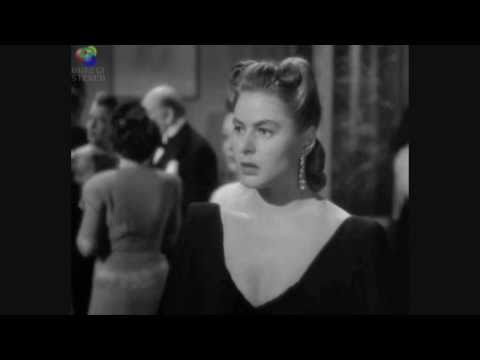
Hitchcock loved using large-scale camera movement to reveal critical information.
One of the most famous examples appears in Notorious.
The shot begins high above a crowded ballroom. Hitchcock deploys a crane-mounted camera to survey a party in progress from a voyeuristic position near the top of a grand staircase. The camera slowly descends through the party, eventually settling on a close-up of the small cellar key in the hand of Alicia Huberman (played by Ingrid Bergman).
The movement is technically impressive—but more importantly, it turns a tiny object into the emotional center of the scene.
Hitchcock often treated the camera like a storyteller, guiding the audience toward the clue that matters most.

The Extreme Close-Up
Another technique Alfred Hitchcock used with devastating precision was the extreme close-up.
Hitchcock understood that if the audience’s attention needed to be fixed on something important, the most effective way to do it was simple: eliminate everything else from the frame. By filling the screen with a single detail—an eye, a key, a hand, or an object—he forced the viewer to confront its significance.
Few scenes demonstrate this better than the infamous shower sequence in Psycho.

Just before the murder of Marion Crane (played by Janet Leigh), Hitchcock inserts a chilling extreme close-up of Norman Bates’ eye as he spies on her through a peephole in the wall. The shot makes the audience uncomfortably aware that Marion is being watched, reinforcing a recurring Hitchcock theme: voyeurism.
Hitchcock had explored this idea earlier in Rear Window, where the audience shares the perspective of a man spying on his neighbors. In Psycho, however, the voyeurism is darker. We are no longer observing harmless domestic routines—we are witnessing predatory behavior.
During and after the attack, Hitchcock continues to use extreme close-ups to create a disturbing visual chain.
As water and Marion’s blood swirl down the shower drain, the camera moves into a tight close-up of the circular drain opening. The image then dissolves into an extreme close-up of Marion’s eye, frozen and lifeless.
The visual transition links the two images in the viewer’s mind.
The drain suggests life literally slipping away, while the unblinking eye confronts the audience with the finality of death. The camera lingers long enough that viewers almost expect the eye to blink—but it never does.
Seen together, these extreme close-ups create a symbolic progression: Norman’s spying eye, the drain carrying away Marion’s life, and Marion’s own lifeless eye staring blankly back at the audience.
Only later, when the film reveals Norman’s fractured psyche, do these images take on deeper meaning. What initially appears to be a simple act of voyeurism becomes evidence of something far more disturbing.
Through a handful of carefully placed extreme close-ups, Hitchcock transforms a violent scene into a psychological one—forcing the audience to confront the unsettling connection between the watcher, the act of murder, and its aftermath.
The “Four-Step Formula”
One of Alfred Hitchcock’s most effective suspense techniques involved gradually tightening the framing of a character while cross-cutting between them and a developing threat.
A famous example appears in The Birds.

In the scene, Melanie Daniels (played by Tippi Hedren) sits smoking on a bench near a children’s playground.
Hitchcock repeatedly cuts between two simple elements:
-
Melanie sitting calmly
-
Birds slowly gathering behind her
Each return to Melanie brings the camera slightly closer to her face.
The audience can see the danger building—but she cannot.
By the time she realizes what is happening, the tension has already reached its peak.
To understand just how meticulously Hitchcock constructs this suspense, it helps to break down exactly how the sequence unfolds.
Melanie walks toward the playground and sits down on a bench with the jungle gym directly behind her. At first the playground is completely empty.
But after she sits down with her back turned, Hitchcock reveals something she does not see: a single crow quietly lands on the jungle gym behind her.
This is the only shot that contains both Melanie and the jungle gym in the same frame, effectively functioning as an establishing shot.
The suspense begins immediately because the audience now has information the character lacks.
Hitchcock then begins alternating between Melanie and the jungle gym behind her.
Each time the camera returns to the jungle gym, more birds have appeared. At the same time, each return to Melanie tightens the framing—from a long shot, to a mid-shot, to a tighter mid-shot, and finally to a close-up.
First pair of shots:
Melanie opens her cigarette case and lights a cigarette. The moment is shown in a long shot. The film then cuts to the jungle gym, where the single crow has now become four birds perched on the jungle gym.
Second pair of shots:
We return to Melanie smoking, now framed in a mid-shot. She begins to look slightly uneasy. The film cuts back to the jungle gym again. Another crow lands, increasing the number to five.
Third pair of shots:
The camera returns to Melanie in a tighter mid-shot. She looks off to her left, away from the jungle gym—an action that subtly increases the tension because the audience realizes she still has not seen the growing flock behind her. The camera cuts back to the jungle gym. Two more birds land. The number increases to nine.
Fourth pair of shots:
The camera returns to Melanie in a close-up. Her anxiety is now obvious. Moments later she notices a crow flying overhead—the first bird she has actually seen in the scene.
Her reaction is immediate.
The camera follows her eyeline as it pans across the sky, tracking the bird as it glides down toward the jungle gym.
When the camera completes the pan and reveals the jungle gym, the situation has escalated dramatically.
Where there had previously been only nine birds, dozens of crows are now silently gathered across the playground equipment.
The sudden reveal functions almost like a jump scare. The audience realizes the full scale of the threat at the exact moment Melanie does.
Hitchcock reinforces the tension visually throughout the sequence. Every shot of the jungle gym is a static wide shot, while each return to Melanie results in progressively tighter framing. At the same time, the duration of Melanie’s shots gradually increases, stretching the suspense further and further.
The reveal of the massive flock comes just moments before the school day ends—when the children are about to pour out onto the playground directly into the path of the waiting birds.
It is a masterclass in suspense construction, showing exactly how carefully Hitchcock orchestrated tension shot by shot.
The Dolly Zoom (The Hitchcock Zoom)
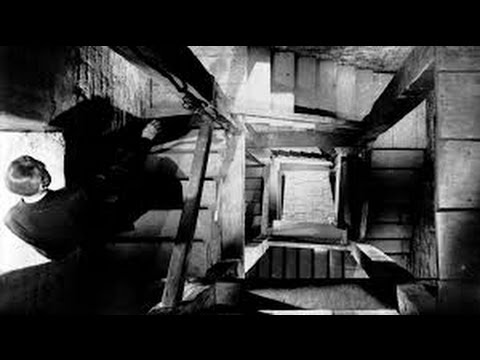
Perhaps Hitchcock’s most famous visual innovation is the dolly zoom, also known as the Vertigo effect.
The technique combines two opposing movements:
-
The camera physically moves forward or backward
-
The lens zooms in the opposite direction
The subject remains roughly the same size in frame, but the background appears to stretch or compress dramatically.
The effect was famously used in Vertigo to represent the protagonist’s fear of heights.
The resulting distortion creates a sense of psychological disorientation, visually expressing the character’s internal panic.
Today, the dolly zoom is one of the most widely imitated techniques in cinema, appearing in films from Jaws to The Lord of the Rings.
Hitchcock and “Pure Cinema”
Underlying all of these techniques was Hitchcock’s belief in what he called pure cinema.
For Hitchcock, the camera should not merely record the action. It should tell the story visually.
Rather than relying on dialogue to explain events, he preferred to communicate crucial information through images.
A camera movement could reveal a clue.
A close-up could expose a character’s fear.
A carefully framed shot could show the audience something a character has not yet seen.
By stripping storytelling down to images and editing, Hitchcock created films that could often be understood almost entirely through visual language.
The Watching Eye
Another recurring motif in Hitchcock’s work is the act of watching and being watched.
Many of his films revolve around characters observing others:
-
Norman Bates spying through the peephole in Psycho
-
Jeffries watching his neighbors in Rear Window
-
Scottie following Madeleine in Vertigo
In each case, the audience is drawn into the act of surveillance.
We share the character’s gaze.
And in doing so, Hitchcock makes the viewer complicit in the act of watching.
This recurring motif reinforces one of Hitchcock’s central themes: curiosity can be dangerous.
But it is also irresistible.
Hitchcock’s Real Trick
Despite the technical brilliance of these shots, Hitchcock insisted that filmmaking was never really about the camera alone.
His goal was always to control how the audience experienced the story.
By carefully deciding what the viewer should know—and what should remain hidden—he could stretch moments of tension far beyond what the script alone might allow.
More than half a century later, filmmakers are still using the visual language Hitchcock perfected.
Because in Hitchcock’s world, suspense wasn’t just written into the story.
It was built into the camera itself.