


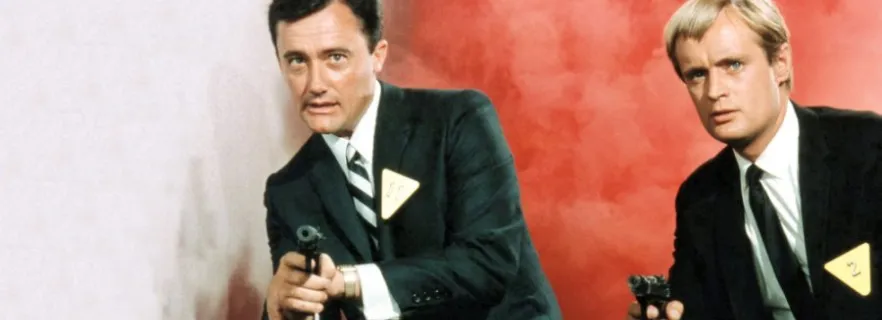
In June 1963, Ian Fleming signed away a spy franchise for a single pound. It has been retold ever since as a charming scrap of trivia. It was nothing of the kind. It was the beginning of the end for Fleming.
On 26 June 1963, at his home in London, Ian Fleming handed an American television producer a piece of paper. The paper surrendered every right he held in any television series featuring a character named Napoleon Solo. The consideration was one pound.
The producer was Norman Felton. The series would become The Man from U.N.C.L.E., one of the defining hits of the 1960s spy boom, and the transaction has been recycled for sixty years as a bit of light irony — the man who invented James Bond, flogging off his second franchise for the price of a round of drinks.
Read it that way and you miss the story entirely. Fleming did not sell Solo cheap because he was being whimsical, and he was not a naïf who failed to see what he had. Three external pressures were closing on him at once — a film franchise, a plagiarism suit, a failing heart. But there was a fourth pressure too, and it came from Fleming himself: his own letter to his agent shows a man doing the arithmetic in real time, weighing a small, uncertain television series against the far larger thing he already had — James Bond — and choosing the larger thing. What he signed away was not a set of ideas. It was his name, at a moment when his name was the most valuable thing in television. While he decided to preserve it for the bigger franchise, Felton was hoping to cash in on his name during the 1960s spy boom Bond had done more than anything else to ignite, and that new TV series would overtly point to Bond’s chief architect, originally titled Ian Fleming’s Solo.
A breakfast, a rejection, and a name
The origin is more accidental than the legend allows. In October 1962, pressed for a series idea over breakfast by an executive from the J. Walter Thompson advertising agency, Felton improvised — a mysterious man, confidential missions, global stakes. Which is to say: Bond with the serial numbers filed off.
The ad man evidently thought so too, because his immediate response was to suggest Felton take the idea to Ian Fleming. This was a slightly awkward suggestion, given that Felton had only just rejected Fleming’s travel book Thrilling Cities as unworkable television.
In fairness to Felton, his own stated reference points were not Fleming at all. The archive holding his papers records that he had been thinking of a spy thriller in the spirit of John Buchan or Graham Greene — a rather different lineage, and one that shows up later in the show’s defining structural device, the ordinary “innocent” dragged weekly out of a humdrum life and into the plot. But that is what Felton was aiming at. What he actually said over breakfast was Bond-shaped enough that an advertising man reached for Fleming within the minute.
Within a week the two men were introduced in a New York hotel room and left alone to invent the next great American hit. What followed was three days of sightseeing, dining and elegant procrastination. At the end of it Fleming produced a name — Napoleon Solo — plus a secretary called April Dancer and roughly a dozen one-line plots, and went home to England.
That is the entirety of it, and the credit runs as a relay rather than a collaboration. Felton had the premise before Fleming was ever mentioned to him. Fleming supplied two names and a page of plot fragments over three days in October 1962. And then, seven months later, Sam Rolfe built the actual show: on 14 May 1963 he delivered the first complete format, with Solo working out of Section II of an outfit called U.N.C.L.E., headquartered behind Manhattan brownstones, at war with a well-financed and highly scientific enemy called Thrush. It was Rolfe who wrote the pilot, and Rolfe who decided the supporting agent should be Russian and called him Illya Kuryakin. Felton later admitted he had thought Fleming’s character names were unusable and far too exotic.
Note the date, because it changes what the pound means. Fleming’s contribution came first, but by 14 May 1963 it had already been almost entirely superseded — the show that went to air was Rolfe’s, built while Arena’s negotiators were still haggling over Fleming’s fee as consultant and story outliner.
Which raises the obvious objection: if Fleming had supplied only two names and a page of fragments, most of it already binned, then a pound was roughly the correct price. Where is the loss?
Here. On the strength of Fleming’s involvement, NBC was prepared to put the series on air without a pilot at all. When he withdrew, the network hesitated — still interested, but Solo would now have to submit a pilot like every other show. An unpiloted network order in 1963 represented an enormous commitment of money and risk, extended on the strength of one man’s name on a title card. That, and not the character sketches, is what Fleming was holding. Alongside it sat the consultancy Arena had spent the spring trying to sign him to — a paid, continuing position on what would become a four-season hit with a spin-off and a merchandising avalanche behind it.
So the pound is correctly priced as payment for Fleming’s ideas and preposterous as payment for what it actually transferred. He was not a creator selling his stake in something he had made. He was a dying man abandoning a negotiation, and signing away the only part of it anyone was really buying: his name and what it meant to audiences.
The squeeze
Three separate pressures closed on him at once, and the aggregators who retell this story generally mention only the first.
Albert R. Broccoli and Harry Saltzman took a dim view of the author of James Bond lending his name to a rival spy series. Dr. No had opened in October 1962; the film rights were theirs; their asset was Fleming, and Fleming was moonlighting. Throughout the spring of 1963, while Arena Productions negotiated for Fleming’s services as consultant and story outliner, the Bond producers applied steady and unsubtle pressure.
It is worth being precise about what they were defending, because it was never the stories. Fleming had contributed two names and a dozen plot fragments, and Rolfe had already discarded nearly all of it. What Eon was protecting was the byline — the three words Ian Fleming’s Solo on a title card. That is also why, when the lawyers finally moved in February 1964, they went after the title of the show rather than a single frame of its content. Fleming’s name was the asset. Everything else was negotiable.
The second pressure was his heart. Fleming had suffered a serious heart attack in 1961 and never properly recovered from it — a long tail of chest infections and pleurisy, and a lifetime of cigarettes and gin behind it.
The third was Kevin McClory. In March 1961, McClory and screenwriter Jack Whittingham had gone to the High Court seeking an injunction against the publication of Thunderball, on the grounds that Fleming had novelised their screenplay without credit. The court let the book through but left the door open, and by 1963 McClory was walking back through it.
Any one of these would have been enough. Together they explain why an author sold a television franchise for a coin. The pound was not a joke. It was a man clearing his desk.
Nine days in Chancery
On 19 November 1963, McClory and Whittingham v. Fleming, Jonathan Cape and Bryce opened in the Chancery Division of the High Court. It ran for nine days of hearings (spread across a roughly three-week calendar span to the settlement on 3 December — hence the two figures that circulate for the trial’s length) and it was covered heavily by a press that had recently discovered James Bond was news.
Fleming conceded in court that he had drawn the novel from the screen material. On 3 December the parties settled. McClory took £35,000 plus costs, the film and television rights in Thunderball, and a permanent acknowledgement of the screen treatment in every future edition of the novel. Fleming kept the literary rights to a book that would, from then on, carry another man’s name on its origins.
He suffered a heart attack during the proceedings. (One account, traced to a letter by Jack Whittingham, says two. The better-attested sources say one.)
It is worth setting the figures beside each other, because they belong to a single eighteen-month sequence and nobody ever prints them together. In June 1963 Fleming assigned Napoleon Solo for £1. In December 1963 he paid out £35,000 for the right to keep calling Thunderball his own.
And then, in 1964, he sold fifty-one per cent of himself.
One hundred thousand pounds
Glidrose Productions was the company Fleming had bought in October 1952, immediately after finishing Casino Royale, as a tax vehicle. Into it he assigned most of his rights in that novel and in everything that followed. Glidrose was, in the most literal sense available, the corporate body of Ian Fleming.
In 1964 he sold control of it. Lord Campbell of Eskan, on behalf of the Booker Brothers conglomerate, bought fifty-one per cent for £100,000 — tax-free, and by the reckoning of his own publisher, cheap. Fleming’s wife Ann was bitterly opposed. His literary agent Peter Janson-Smith defended it for the rest of his life on the grounds that the alternative was ruinous taxation in two countries.
Whichever view you take, the arithmetic is not in dispute. Within roughly a year, Fleming gave away one franchise for a pound, bought back the disputed title to another for thirty-five thousand, and sold the controlling interest in the whole literary estate for a hundred thousand.
He died on 12 August 1964 at the Kent and Canterbury Hospital, aged fifty-six, on his son Caspar’s twelfth birthday. His last recorded remark was an apology to the ambulance crew for the inconvenience.
The Man from U.N.C.L.E. premiered on NBC six weeks later, on 22 September 1964. Napoleon Solo, the name Fleming had produced on the third day in a hotel room and sold for a pound, went on to four seasons, 105 episodes, a spin-off, a merchandising deluge and a Guy Ritchie feature film in 2015.
The coda nobody prints
There is one last turn, and it is the reason this story is worth telling properly.
Booker did rather well out of its Author Services division. The Fleming copyrights were followed by Georgette Heyer’s in 1966, and by the majority stake in Agatha Christie’s. In 1968, the company used the money those purchases generated to endow a new award for literary fiction.
They called it the Booker Prize.
Britain’s most prestigious literary award was seeded, in part, by the copyrights of a thriller writer who was told for his entire career that he was not producing literature — and who conceded the point himself, with characteristic elegance, when he described his ambition as writing thrillers designed to be read as literature.
He sold the company in 1964 to escape the taxman. He has been quietly funding the prize he was never eligible for ever since.


- Why Robert Pattinson’s Batman Should Be DCU’s Caped Crusader - October 12, 2026
- California’s AG Loses to Paramount: Inside the Paramount / Warner Bros. Discovery Merger — And Why Ellison May Still Leave California - September 26, 2026
- Napoleon Solo Sold for £1: The Year Ian Fleming Stopped Owning Ian Fleming - July 25, 2026