


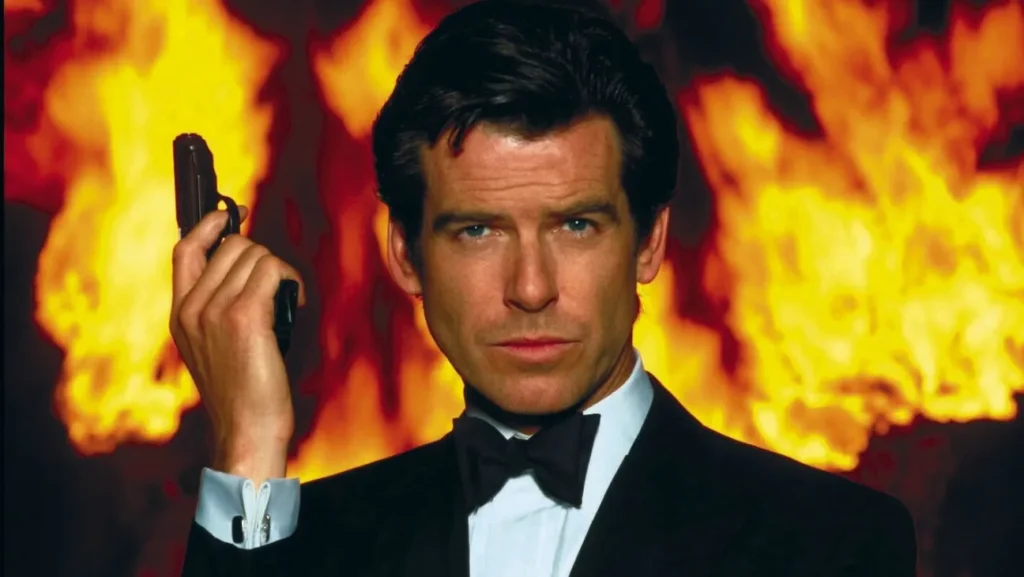
In 1994, five people sat down at MGM/UA to settle who would play James Bond next. Two wanted Timothy Dalton back. Two wanted somebody else. The room’s oldest member, in failing health, would be the one to decide.
On one side sat Albert “Cubby” Broccoli, the producer who had run the Bond series since 1962, now in declining health and attending what would be his final casting decision. Beside him were his daughter Barbara Broccoli and his stepson Michael G. Wilson, both newly elevated to producing duties as Cubby’s health forced him to step back from day-to-day control. Across the table sat John Calley, president of MGM, and Jeff Kleeman, the studio’s executive vice president of production, who would go on to oversee Brosnan’s first three Bond films.
The disagreement was about Timothy Dalton. Dalton had played Bond in The Living Daylights (1987) and Licence to Kill (1989). A lawsuit between MGM and Eon’s parent company, Danjaq, stretched the gap before his next film to six years. By the time it settled, Dalton wasn’t willing to commit to the multi-picture deal the producers wanted, and in April 1994 he formally stepped away from the role.
That left a vacancy, and the studio needed to fill it fast. Pierce Brosnan had been here before — from the losing side.
1986

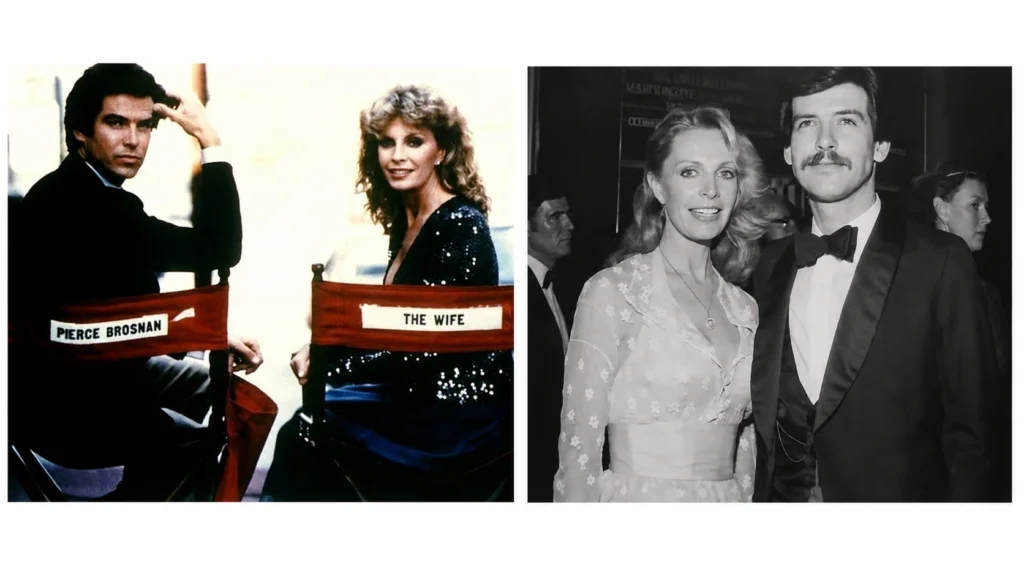
Brosnan had been around a Bond set for years by then. In 1981, his then-wife, Cassandra Harris, was filming For Your Eyes Only on location in Corfu, playing Countess Lisl — a shoot troubled enough that sand kept fouling the camera engines on the beach near Lake Korission, and the production ran days behind schedule with cost-conscious United Artists executives watching. Brosnan visited during that stretch. Director John Glen noticed him there. So did Julian Glover, who played the villain Kristatos and later recalled evenings spent with the couple, with the general feeling among the cast at the time being that Brosnan ought to play Bond himself. Brosnan has described it as an exciting period to be around a production like that — he’d just come off a year and a half in West End theatre and was out of work when the visit happened.
By the time Roger Moore made his final Bond film, A View to a Kill, in 1985, Brosnan was already a star in his own right, headlining the NBC series Remington Steele, and talk of a Bond successor was already naming him as a contender. Moore said publicly that year that he thought Brosnan would make a fine choice for the role.

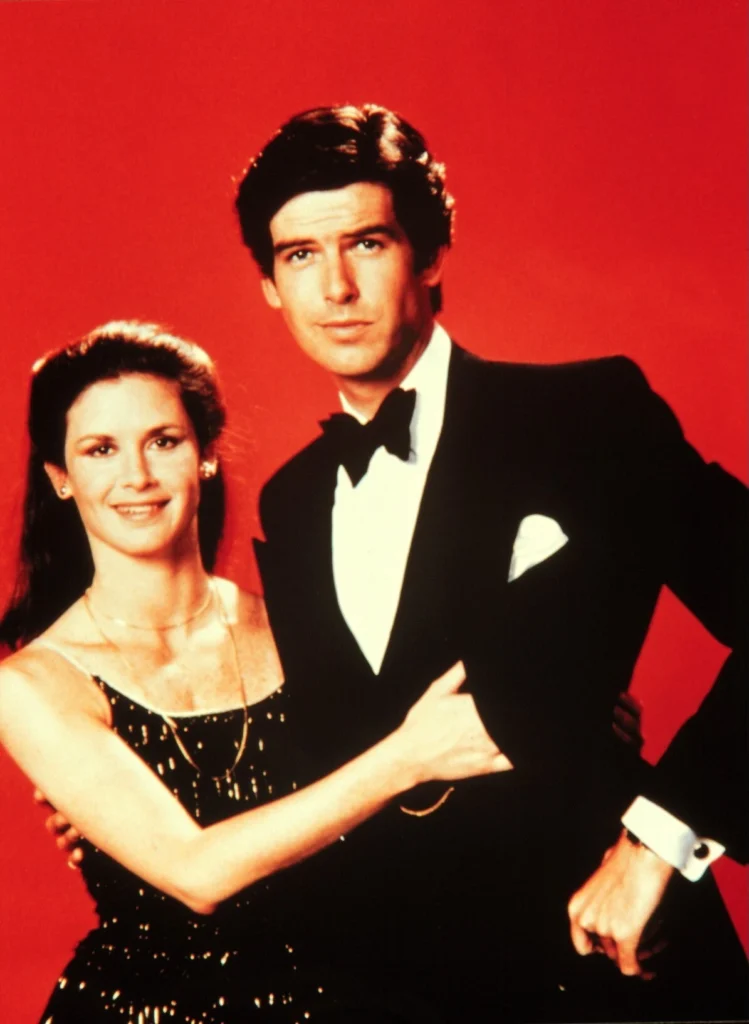
Formal testing began at Pinewood Studios in early 1986, and Brosnan wasn’t the only contender. Maryam d’Abo, brought in to read opposite candidates, worked scenes with the French actor Lambert Wilson among others; Wilson’s test material included Bond’s execution of the traitorous Professor Dent and his seduction of Tatiana Romanova. Other names considered included Finlay Light, Andrew Clarke and Trevor Eve. Sam Neill, who’d played the real-life spy Sidney Reilly on television, was the preferred choice of most of the production team — everyone, by most accounts, except Cubby. Brosnan was widely seen as the heir apparent waiting in the wings.
Brosnan has described his own screen test at Pinewood as a “heady experience” — a genuine opportunity he threw himself into. When the offer followed, it felt to him like the natural next step: he’d already built a career in America, the television series had been a hit, and becoming a film star as James Bond seemed to be exactly where things were heading. The one complication was his contract with NBC.
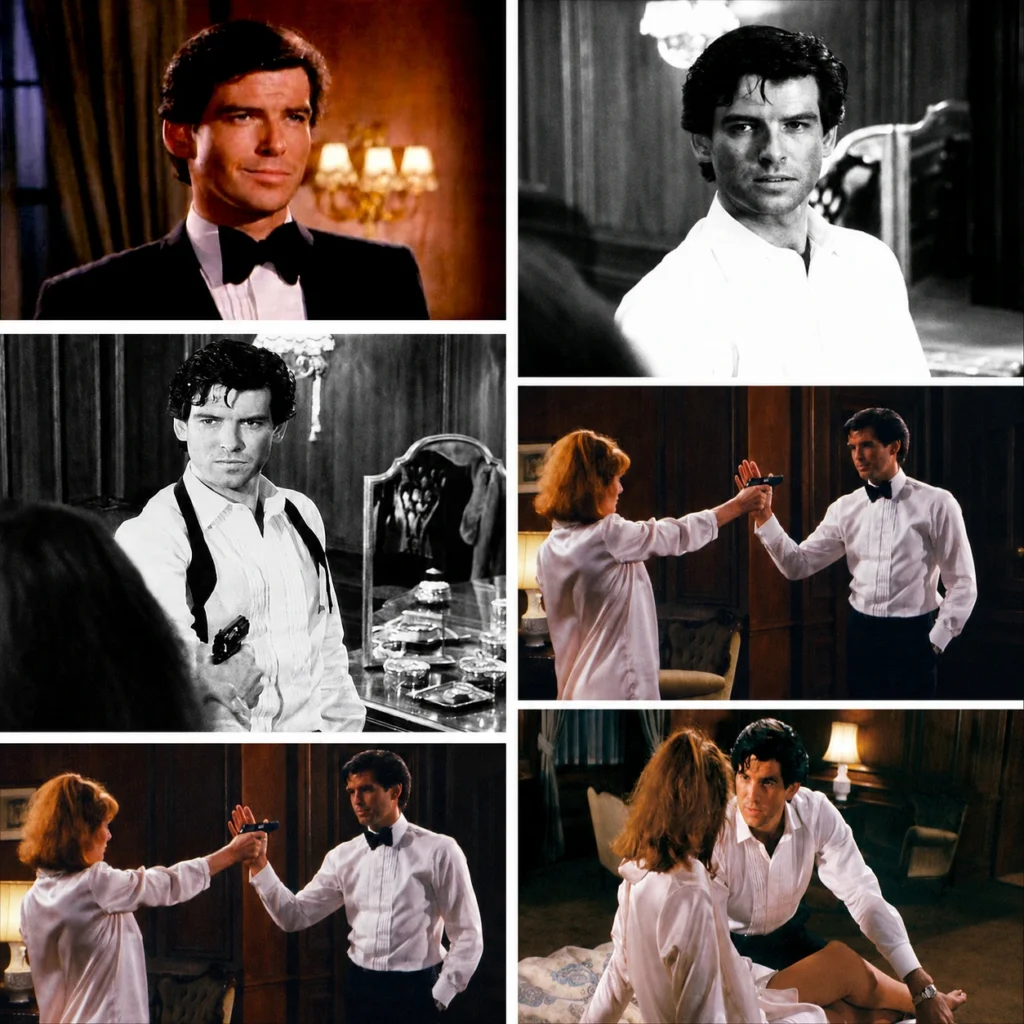
On 12 May 1986, Brosnan screen-tested at Pinewood opposite actress Annie Lambert, followed by stunt work with Clive Curtis. The screen test photographs show him performing the hotel room confrontation from On Her Majesty’s Secret Service — the sequence in which Tracy holds Bond at gunpoint before he disarms her — along with a fight sequence from the same section of the film. They are the same scenes Dalton tested with later.

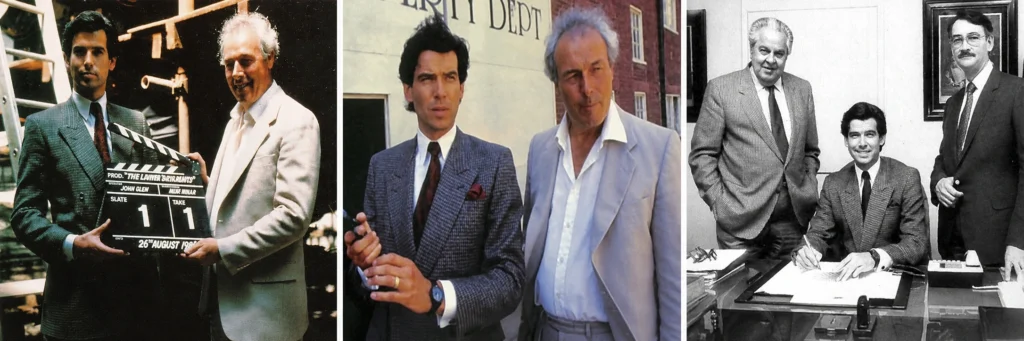
The show was cancelled that May after four seasons, and Broccoli moved quickly. In June 1986, Brosnan signed a contract at Pinewood Studios — photographed doing so with Cubby and Wilson. Publicity shots were also taken with director John Glen, a clapperboard in hand dated 26 August 1986, the anticipated start of filming — prepared in advance for an announcement that never came. The deal included a 60-day conditional clause allowing NBC to try to resell the cancelled show; if they exercised it, Brosnan was theirs again. Brosnan has said he was superstitious about it: he kept the Living Daylights script on his nightstand and would occasionally open it to recite the famous introduction, but wouldn’t let himself properly prepare until that clause had expired. “But the ink never got dry,” he later said. In the meantime, he did wardrobe fittings, met with Cubby, and posed for photographs outside the Bond stage.
“I’d done all the photos with the iconic gun pose,” he recalled.

The 60 days nearly ran out. On day 58, everything still looked fine — Cubby had told MTM and NBC they could have Brosnan back for six episodes of Remington Steele, no more, before he became Eon’s. Then, on day 60, with Brosnan and Harris living in the Malibu Colony, he went to open a bottle of Cristal Rosé to celebrate as the window closed. As he carried it out to where Harris was sitting on the deck, the phone rang. It was his agent, Fred Specktor, calling to say NBC wanted a full 22-episode commitment instead, and that Cubby wouldn’t agree to it. The deal was off. Cubby didn’t call to commiserate.
Brosnan has described it as a devastating blow — the kind of news that reroutes a life in a single phone call. He went ahead and filmed the six episodes of Remington Steele anyway; NBC cancelled the show regardless once they’d had their use of him. The role went to Timothy Dalton. Brosnan has said the full weight of it didn’t hit him until months later, when Dalton’s film actually reached cinemas — driving through Beverly Hills toward the beach one day, he had to pull the car over and let his frustration out on a flock of seagulls.
Eight years after that phone call in Malibu, Brosnan was free again.
The Meeting
In May 1994, director Martin Campbell went, in his own words, around the world interviewing potential Bonds. He met Ralph Fiennes socially at Cubby’s house — a meeting both men later called pleasant, though nothing came of it on either side. Liam Neeson said he was heavily courted too. Casting director Debbie McWilliams tested ten British actors in total. United Artists, though, had their sights fixed on one man throughout: Pierce Brosnan.
Brosnan, for his part, was wary. He’d been burned once already. He has said his agent told him to be prepared — the Broccolis were back in town and interested — and that he approached it cautiously, once bitten, twice shy. A lunch at the Peninsula Hotel with Barbara, Wilson, John Calley and Jeff Kleeman was their first real encounter; a later meeting with Calley suggested it was actually going to happen this time. Brosnan told his agent he didn’t want to be strung along again, or left waiting at the altar a second time. After that, things moved quickly.
According to Kleeman, the producers convened to settle on a direction, and the room split along family lines. Barbara and Wilson argued for bringing Dalton back. Calley and Kleeman pushed for Brosnan. The meeting, by Kleeman’s account, got heated. Cubby had been sitting quietly through it; he ended the debate with a single tap of his cane on the floor, enough to make the room stop talking and turn to him.
“Cubby very simply said, ‘We should go with Pierce,’ and that was that.”
His word closed the debate. It was the last casting call he would make for a franchise he’d run for over three decades. He died the following year, months after the film’s release.
There wasn’t even a new screen test to confirm it. Brosnan has confirmed he didn’t shoot one for GoldenEye. Instead, director John Glen’s son Matthew, then a junior editor on the Bond films, was asked to track down the screentests his father had shot back in 1986 — and by Glen’s own account, Brosnan got the part the second time around on the strength of that old footage.
On 1 June 1994, Brosnan’s agent — the same Fred Specktor who’d delivered the bad news eight years earlier — called again, this time with the opposite message. Brosnan has described standing in his kitchen as Specktor told him the part was his, that the film was called GoldenEye, and that he had to keep it secret for now. His fiancée Keeley was standing beside him when he hung up the phone.
Dalton has told the story differently — that the producers wanted a four- or five-picture commitment he wasn’t prepared to give, and that leaving was his decision, not theirs. Both accounts can be true at once: an actor stepping back from an open-ended commitment, and a producing team simultaneously debating who should replace him. Memory and motive rarely line up perfectly.
Once the Decision Was Made
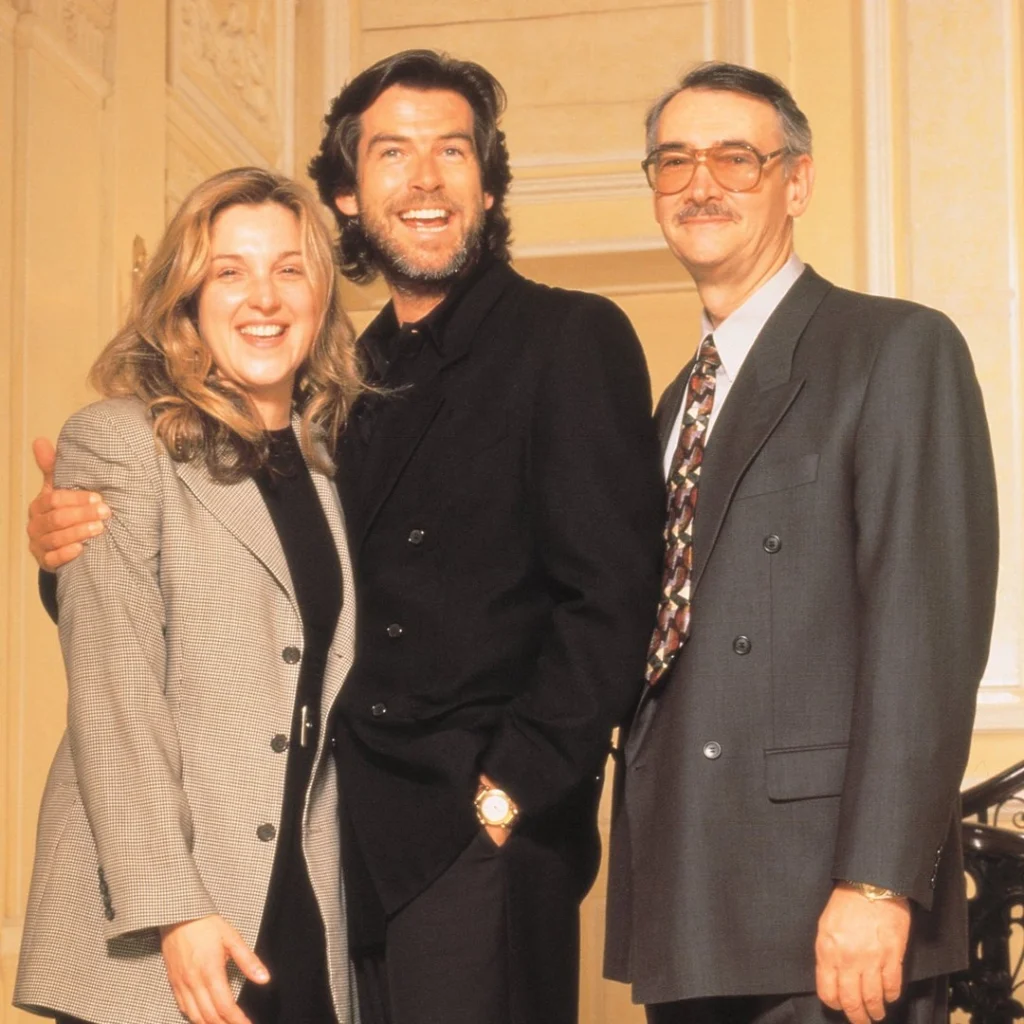
Whatever position Barbara Broccoli held in that meeting, it didn’t carry into the work that followed. Once Brosnan was cast, she and Wilson ran the production end to end. They hired Martin Campbell to direct after John Woo passed on the job. They brought in screenwriter Jeffrey Caine to rewrite Michael France’s draft. They cast Judi Dench as the franchise’s first female M.
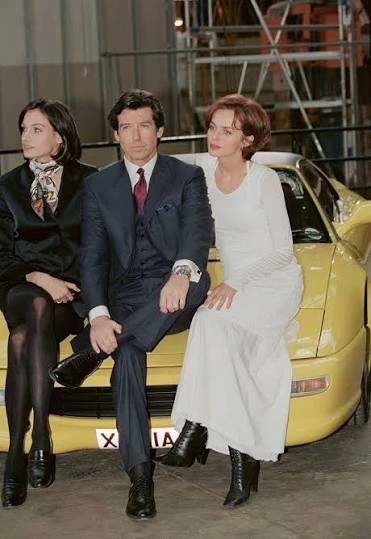

On 8 June 1994, Eon unveiled Brosnan as the new Bond to the world’s press at London’s Regent Hotel. Around 350 journalists packed the room, and the announcement was broadcast globally. Brosnan recalled waiting behind a screen as the Bond theme began to play, telling author Garth Pearce for The Making of GoldenEye that he knew once he stepped out, “my life was going to change forever.”
He wasn’t exaggerating. Two days later, while filming the television drama Robinson Crusoe in a remote village in Papua New Guinea, local children ran up to him shouting his new name: “James Bond! James Bond!”
Cubby remained on as a consulting producer, present where his health allowed, until his death in 1996.
GoldenEye made $350 million worldwide on a $60 million budget and relaunched a franchise the studio’s own research had called outdated. Brosnan went on to star in three more films — Tomorrow Never Dies, The World Is Not Enough, and Die Another Day — completing the four-picture contract he’d signed at the outset.

The Phone Call
By 2004, Brosnan expected to come back for a fifth film — one that would finally bring Casino Royale to the screen, a Fleming novel Eon had never adapted. He had ideas for it: grittier and edgier than what had come before, built on a sense of ownership he felt after four outings in the role. His agent at the time, McGurk, has said Brosnan believed he was roughly 90 percent of the way to signing the deal.
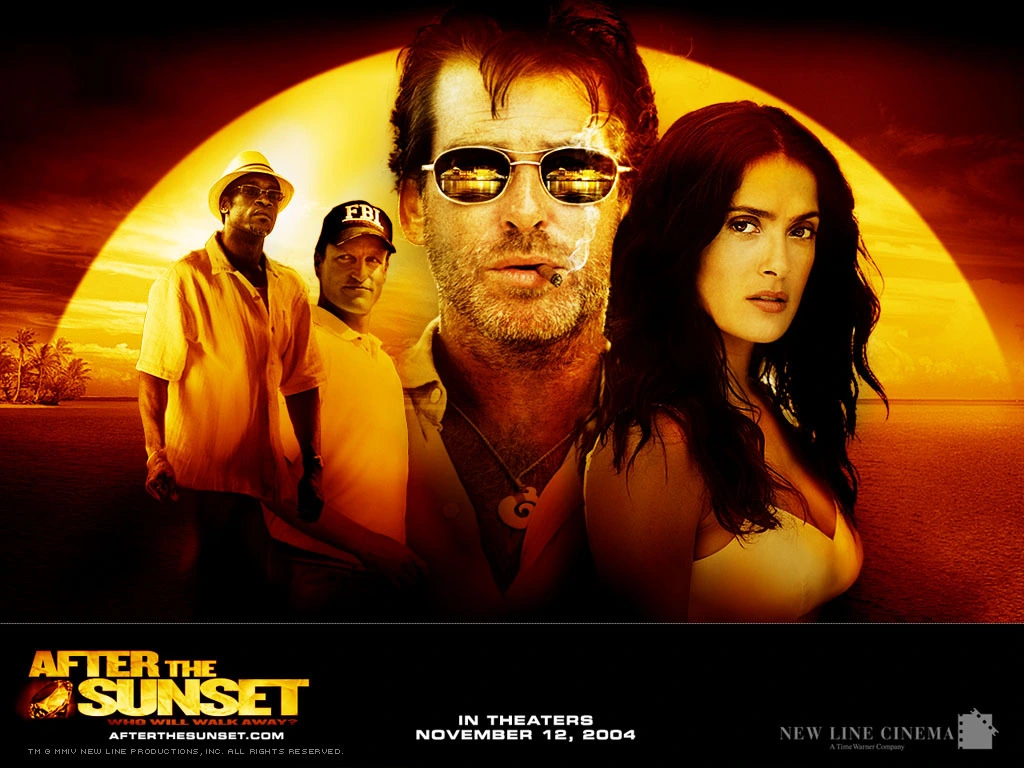

Then, while he was in the Bahamas filming After the Sunset, his agents called to say negotiations had stalled — the producers weren’t sure what they wanted to do, and would call back the following week. Brosnan was staying at the late Richard Harris’s old house in the Bahamas — Harris had been his first wife’s former brother-in-law — when the follow-up call came, this time from Broccoli and Wilson directly.
Broccoli was crying on the line. Wilson was more composed. As Brosnan recalled it:
“You were a great James Bond. Thank you very much.”
Brosnan thanked him back, said goodbye, and that was it.
Accounts differ on what actually broke the deal down. McGurk has said the studio balked at the cost of raising his salary by five or six million dollars, even against a film in Die Another Day that had generated hundreds of millions in profit, and that the producers simply weren’t moving forward with him regardless of price. Brosnan disputed this directly, telling the San Francisco Chronicle in July 2005 that there had been “preposterous ideas that I was asking for $40 million and $30 million,” and that none of it was true. Before the deal collapsed, he’d had lunch with the producers in Santa Monica to make his case and hear their reasoning directly; by McGurk’s account, the answer was a flat no, with nothing left to appeal. Brosnan has said he was utterly shocked by how it played out.
He held out hope for a return for some time afterward, before Eon eventually announced Daniel Craig as his replacement.
By that point, his original four-picture contract was already fulfilled — Die Another Day had been the fourth film. Four months before the Bahamas call, screenwriters Neal Purvis and Robert Wade had still been drafting a Bond script with Brosnan attached, telling an audience at the British Library they’d been working on it for three weeks.
The film rights to Casino Royale had reverted to MGM/UA from Sony in 1999, and Broccoli later said the decision to finally adapt it was straightforward once the rights were back:
“Michael and I decided to do it.”
It was only after Brosnan was gone that the project became the ground-up reboot it eventually was — built around Bond earning his 00 status for the first time on screen, a structure shaped for a new actor rather than one already four films into the role.
Brosnan has never said he holds Broccoli or Wilson personally responsible for how it ended — even while admitting how much the call itself stung.


- Why Robert Pattinson’s Batman Should Be DCU’s Caped Crusader - October 12, 2026
- California’s AG Loses to Paramount: Inside the Paramount / Warner Bros. Discovery Merger — And Why Ellison May Still Leave California - September 26, 2026
- Napoleon Solo Sold for £1: The Year Ian Fleming Stopped Owning Ian Fleming - July 25, 2026