


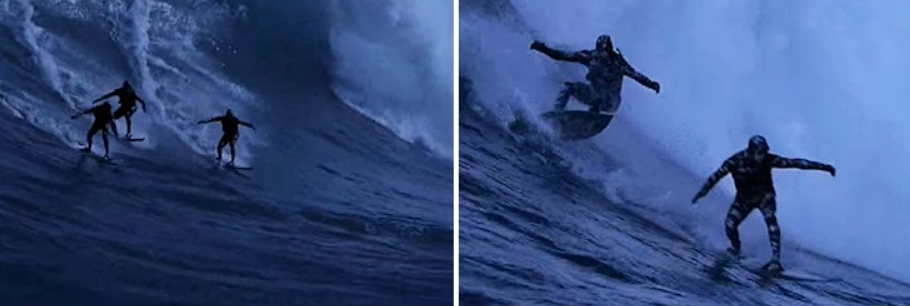
By the time Die Another Day went into production in 2002, James Bond had done almost everything. He had skied on snow — practically trademarked the image. He had snowboarded in A View to a Kill. He had even waterskied barefoot, towed behind a seaplane. The logical progression, then, was for Bond to surf. But this being Bond, his introduction to the sport couldn’t be a gentle swell off a sun-warmed beach. It had to be at the absolute pinnacle — the most dangerous, awe-inspiring wave in the world. It had to be Jaws.
For those who know surfing, the choice of double is as remarkable as the wave itself. Laird Hamilton is the man most responsible for modern big-wave surfing — the pioneer who, with Dave Kalama and Darrick Doerner, essentially invented tow-in surfing at Jaws in the 1990s, using jet skis to access waves too large and fast to paddle into. When EON Productions came looking for someone to put into a wetsuit and play Bond on a 40-foot face, Hamilton agreed without hesitation. He had surfed Jaws hundreds of times. He would do it once more as 007.
What audiences see in the finished film, however, is almost nothing. The Hawaiian location doubles for an unnamed stretch of North Korean coastline, photographed in the flat gray light of a December dawn — the kind of light that strips color and geography from a place, making it unreadable. Unless you know what Jaws looks like, and what it means to surf it, the sequence reads simply as spectacular. Which is, of course, exactly the point.
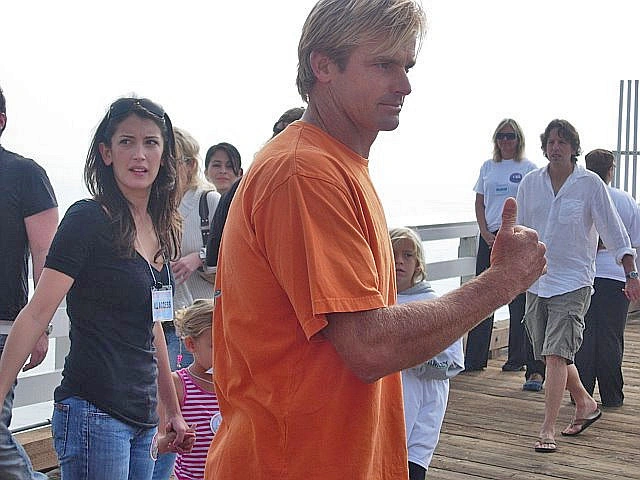

Production on Die Another Day was scheduled to begin at Pinewood Studios in January 2002. The surfing sequence, logistically separate from principal photography, had been given a three-month window beginning that same January. But Hamilton and local producer Glenn Beadles knew something the London office didn’t: Jaws peaks around Christmas. The pair convinced EON to move the shoot up by a month, and on December 26, 2001 — the day after Christmas — the crew assembled at Peahi off the north coast of Maui, Hawaii.
Beadles’ operation ran to 32 crew members, 31 of them local Hawaiians, with second unit cinematography handled by Don King and Sonny Miller. The budget for the sequence was $750,000. Getting there in time was its own logistical trial: in the months after 9/11, shipping specialist equipment — including wetsuits manufactured in England and a crate of rubber machine guns — through American security was a particular challenge.
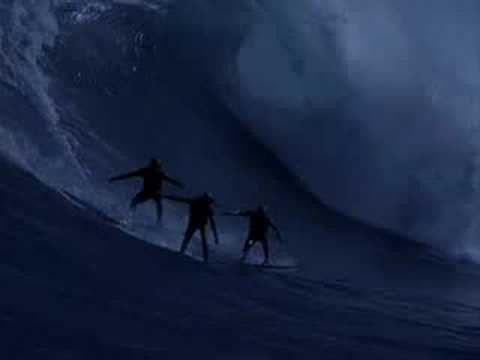
The first day was a wash. A storm front brought overcast and wind, and none of the footage survived the edit. The second day was another matter entirely. The team hit the water just after dawn, Hamilton, Kalama, and Doerner kitted out in black-and-gray striped wetsuits, fake night-vision goggles, and rubber firearms. Waves averaged 40-foot faces in glassy conditions. Aerial cinematographer Don King rode a helicopter with the door stripped out, sometimes five feet above the waterline and thirty feet from the curl, close enough that spray from breaking waves splashed his lens.
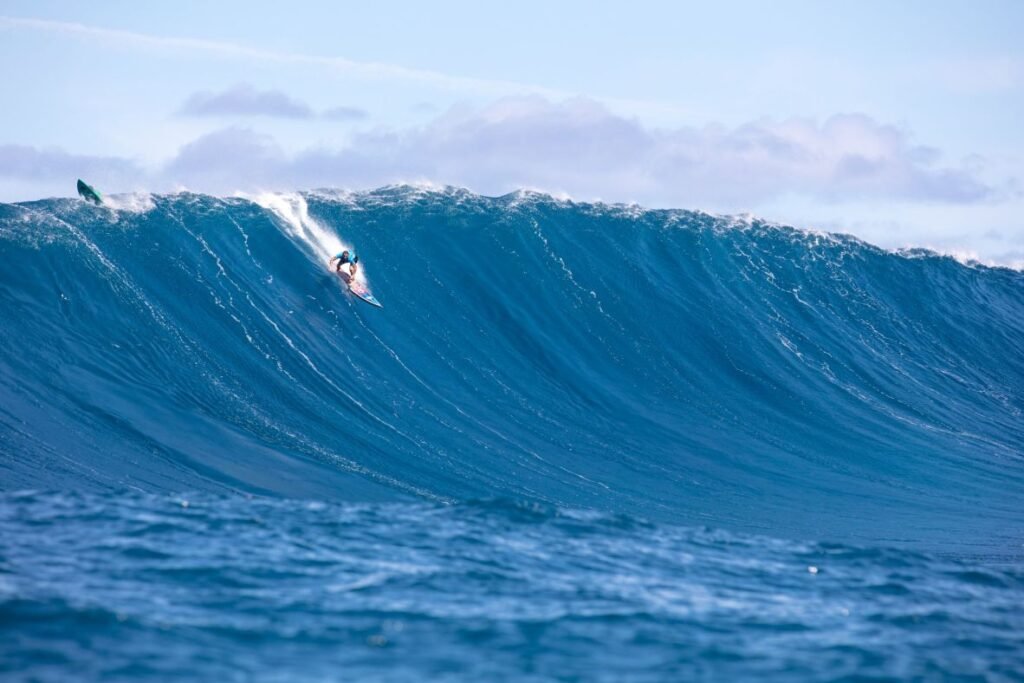

The original story had two of the three surfers wiping out, leaving Bond the sole survivor of the drop. But when producers screened the footage of all three men riding waves of that scale, the story was rewritten. The riding was simply too good to throw away.
Wipeouts were saved for the third and final day, by deliberate design. Hamilton and Beadles scheduled them last so that an injury early in the shoot wouldn’t compromise the wave-riding footage. Even then, the psychology of wiping out at Jaws required active mental effort from men who had spent careers trying not to.
“The hardest thing for all of us was getting into the mind-set to wipe out,” Kalama told the Honolulu Star-Bulletin, “because it isn’t something we normally do. I wiped out more that day than in ten years of surfing Jaws.”
Doerner absorbed hits from the wave’s lip. Kalama aimed for the sheer face. By the end of day three, he was, in his own word, “truly beat.”
Nearly a dozen hours of footage was shot over those three days. Approximately two minutes made it into the film. The wipeout reel — the sequences that cost the most, physically — was cut entirely, surfacing only in the DVD’s making-of featurette.

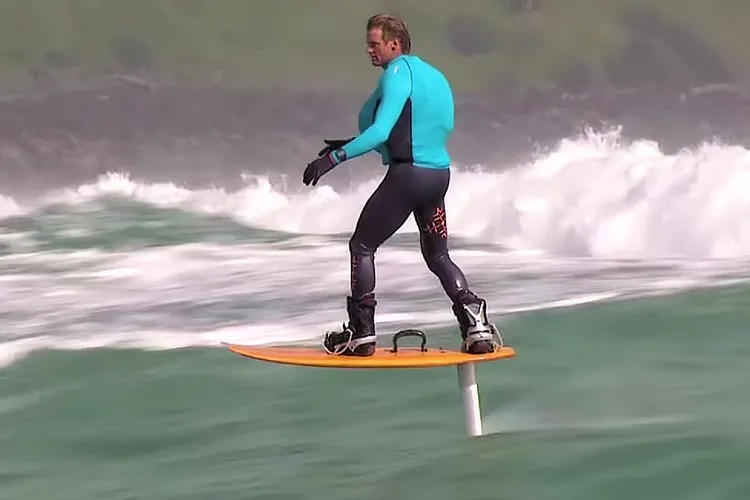
Hamilton, for his part, had wanted to push the sequence further still. He had proposed using his own invention: a hydrofoil surfboard that lifts the rider above the water surface, capable of riding deep-ocean swells that never break. EON didn’t take him up on it. What they used was remarkable enough.
The audience watching Die Another Day in November 2002 saw Bond arrive in North Korea the way Bond arrives everywhere — through sheer physical audacity, in a place no sensible person would go. What they were actually watching was three of the greatest big-wave surfers in the world, riding one of the most dangerous waves on earth, on the day after Christmas, six thousand miles from the nearest film studio.


- California’s AG Loses to Paramount: Inside the Paramount / Warner Bros. Discovery Merger — And Why Ellison May Still Leave California - September 26, 2026
- Napoleon Solo Sold for £1: The Year Ian Fleming Stopped Owning Ian Fleming - July 25, 2026
- The Untold Story of The Persuaders!: Cars, Glamour, Conflict and James Bond - July 20, 2026