


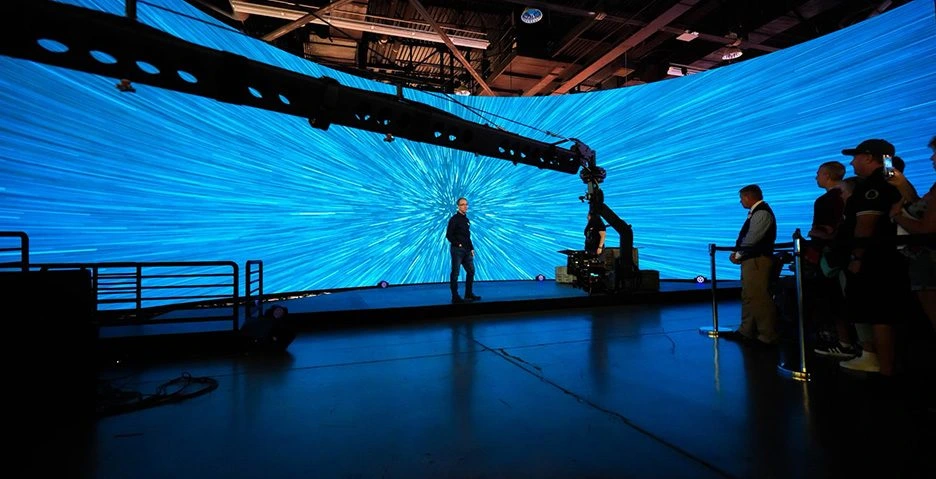
StageCraft transformed television production when it arrived with The Mandalorian in 2019. Within four years it had become the most criticised tool in Hollywood. This is the story of how that happened — and what the industry did about it.
When The Mandalorian Season 1 premiered, the reaction to ILM’s StageCraft technology was close to unanimous. Here was a production method that solved real problems: no location shoots, no greenscreen spill, interactive lighting in real-time, and a visual quality that genuinely rivalled location photography for the environments it was designed to replicate. Over 50% of the show was shot inside the Volume. The results spoke for themselves.
What happened next is a familiar story in Hollywood: a tool that worked exceptionally well for one specific set of problems got adopted as a general solution, applied to problems it wasn’t designed to solve, and blamed for the results. By 2023, the Volume had become shorthand for a particular kind of visual failure — flat, hermetic, geographically vague — in productions from both sides of the Disney empire and beyond.
The story is not that StageCraft stopped working. It’s that the industry stopped understanding what it was for.
[For a full technical breakdown of how StageCraft works — the frustum, the Brain Bar, the LED physics, and the moire problem — see our companion explainer.]
Season 1 to Season 2: The First Signals

But the limitations were already visible to those working inside the system. The Volume excelled in environments it was built for: hard surfaces, controlled interiors, overcast or diffused light. It was noticeably weaker everywhere else. The silvery winter exteriors and dark interiors that dominate Seasons 1 and 2 are not accidents of story — they are, in part, choices shaped by what the technology could convincingly deliver. Bright sunlight was the one thing the Volume could not do well. The LED screens simulate soft, even light. Hard directionality produces reflections on the walls themselves, breaking the illusion. Organic environments — trees, grass, water — were far more difficult to render than Star Wars‘ native vocabulary of metal, rock, and droids.
There were subtler technical problems too. Richard Bluff identified a colour spill issue specific to bright-environment sequences: the LED wall, functioning as the primary light source, cast the colours of the virtual environment directly onto the physical set in front of it. In sandy desert sequences, vivid props in the virtual background produced coloured light that fell directly onto the sand, requiring correction in post. The LED-as-light-source principle that made StageCraft revolutionary was also, in specific circumstances, the source of its most persistent on-set headaches.
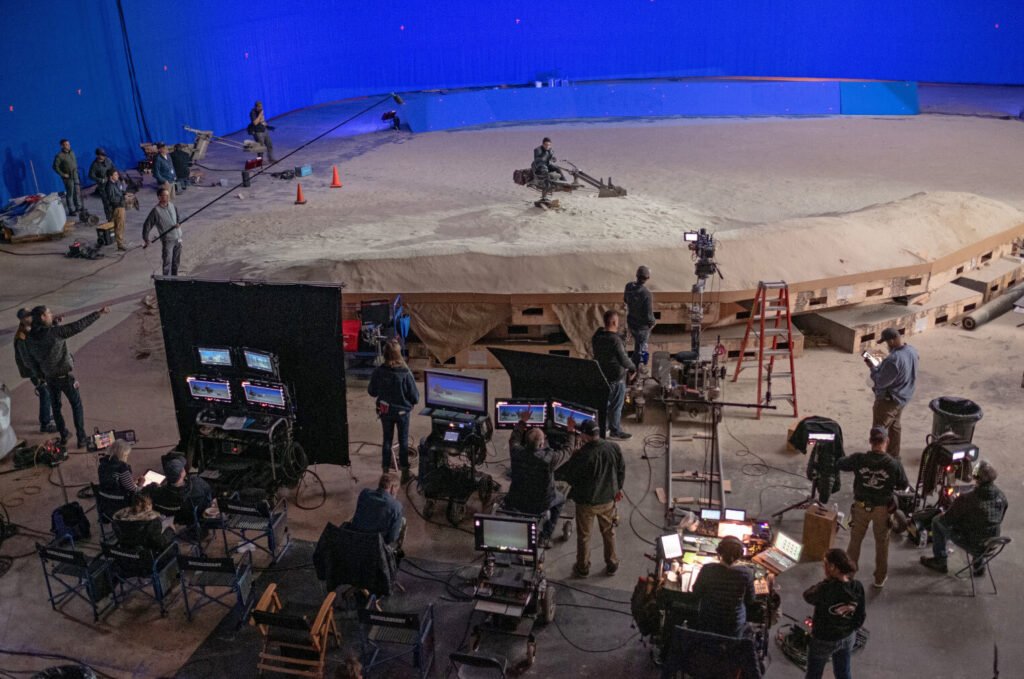
Fast movement was another constraint the early promotional coverage didn’t address. The Volume’s camera tracking system — the frustum — updates the virtual environment in response to camera movement in near-real-time, but near-real-time is not instantaneous. At normal filming speeds the latency is imperceptible. At the speeds required for a vehicle chase sequence it becomes visible: the environment doesn’t update fast enough to maintain the illusion, and the background lags fractionally behind the camera. The practical consequence is that speeder bikes, swoops, and other fast-moving vehicles couldn’t be convincingly shot inside the Volume. For those sequences, productions reverted to conventional bluescreen — draping the fabric directly over the LED panels to use the stage’s geometry while bypassing its electronics entirely. A Season 1 behind-the-scenes photograph, copyright Walt Disney Pictures, shows this in practice: the curved StageCraft wall at Manhattan Beach covered in blue chroma key fabric, a practical sand set built in front of it, and the virtual production crew with monitors in the foreground. The curve in the backdrop — which would serve no purpose on a purpose-built flat bluescreen stage — is the tell. The LED panels are behind the drape. StageCraft’s own infrastructure was being repurposed for the method it was built to replace.
This produced an irony that went largely unexamined at the time. With roughly 60% of each season shot inside the Volume, the technology was setting the visual register for the majority of the show’s footage. The controlled, soft-lit, slightly hermetic look of the Volume sequences became the baseline the entire production had to match. The remaining 40% — location work, practical sets, bluescreen sequences — had to be graded and framed to sit alongside Volume material without visual discontinuity. The Volume wasn’t just shaping the scenes shot inside it. It was, by sheer weight of footage, dictating the look of everything else. Real sunlight on a real desert had to be brought down to meet the stage. The technology meant to liberate the production from its environment was, in practice, imposing one.
Season 3 and the Expanding Scale Problem
By Season 3, the limitations had become a production design problem. The physical sets had grown with the narrative — The Mandalorian was expanding its world — and the story was taking the show to environments the Volume was never designed to serve. Favreau was diplomatic but precise about both. On the technology’s constraints: “The exterior stuff with sunlight is the one thing you really can’t do well here. ‘Star Wars’ lends itself because of hard surfaces — rocks, metal, droids. It makes it easier to make it look real faster. Organic stuff is harder.” On the Season 3 production decisions, he was characteristically story-first: “We have Mandalore that we go to, and that doesn’t fit on The Volume stage, so we’re letting the story dictate what we do.”
Both statements are true, and neither is a concession of failure. Favreau has consistently framed the Volume as one tool among several — the right tool for specific conditions, replaced by other methods when those conditions don’t apply. What he hasn’t said, and has no reason to say publicly, is that the technology’s dominance across the first two seasons had a systemic effect on the show’s visual identity that went beyond individual sequences.
When 60% of a production is shot in the Volume, the technology doesn’t just affect those sequences — it sets the visual register for the entire show. The controlled, soft-lit look of the Volume footage becomes the baseline everything else must meet. Location work and practical sets can’t look demonstrably better than the stage material without creating visual discontinuity, so the production’s grade, framing, and lighting are pulled toward the Volume’s aesthetic rather than away from it. The technology meant to liberate the production from environmental constraints was, in practice, imposing its own. The silvery winters and dark interiors of Seasons 1 and 2 aren’t just what the Volume does well — they’re what a production looks like when the Volume is setting the visual grammar for the whole show.
Reducing the proportion of Volume footage breaks that grip. It lets the show’s visual identity be set by its best material rather than its most prevalent one. Favreau’s stated reason for the Season 3 shift and this systemic reading of it are not competing explanations — they compound each other. The story demanded environments the Volume couldn’t serve, and stepping back from the Volume simultaneously returned the show’s visual range. Both things are likely true at once.
One caveat is worth stating before attributing every flat or overcast sequence in the Star Wars Disney+ slate to the LED stage. Not every stage-bound-looking scene was shot in the Volume. A virtual production supervisor noted in 2026 that online breakdowns have repeatedly misidentified backlot work, practical sets, and conventional bluescreen as Volume footage — citing the grey lighting or soft backgrounds as tells. The Volume occasionally got blamed for production choices that had nothing to do with it. The hermetic quality of this era of Star Wars television was a systemic problem. The Volume was the dominant factor — but not always the guilty one.
The Overuse Problem: Book of Boba Fett and Obi-Wan Kenobi

The problems that emerged in Seasons 1 and 2 of The Mandalorian were manageable because the filmmakers understood their tool. What happened next, on other productions, was the result of the technology being adopted without that understanding.
The Book of Boba Fett and Obi-Wan Kenobi both employed the Volume extensively. Both drew significant criticism for the results. Tatooine, which George Lucas originally shot in Tunisia — using the actual grit of a real desert — became a literal CG sandbox. The digital blur of blistering heat does not compare to the real thing. The ease with which the technology can conjure any environment meant filmmakers were making choices based on what the Volume could provide, not on what the story required. History, as observers noted at the time, was repeating itself: the Star Wars prequels had been criticised for over-reliance on primitive CG; now a generation of streaming shows was earning the same criticism through a newer mechanism.
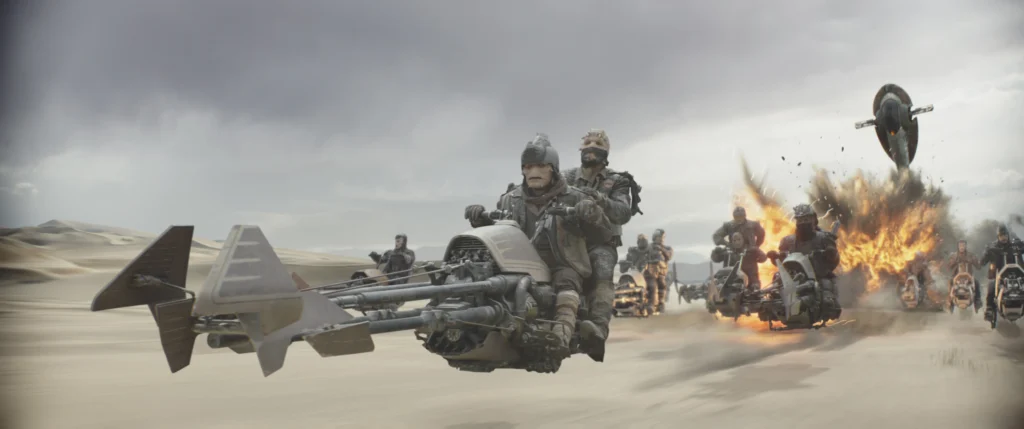
The Book of Boba Fett speeder chase sequence became the most widely cited specific failure case. The chase — intended as a kinetic action set piece through the streets of Mos Espa — read on screen as a slow, unconvincing crawl. The Volume’s latency problem was directly implicated: at the speeds a convincing chase requires, the LED environment cannot update fast enough to maintain the illusion of motion. The background doesn’t behave like a world being moved through at speed. It behaves like a backdrop. Audiences noticed immediately, and the sequence became shorthand — alongside the similar criticism of Obi-Wan Kenobi‘s infamous chase after a child Leia — for a class of production failure specific to the Volume era. The technology that was supposed to make impossible environments achievable had made a street chase look like a theme park ride.
The aesthetic consequences were cumulative. Productions shot extensively in the Volume tend to share a look: controlled, somewhat hermetic, visually coherent but geographically vague. Without real horizon lines, real atmospheric depth, or real sunlight, environments can feel like exactly what they are — a stage. One insider in a 2022 Hollywood Reporter report on the industry’s growing pains with the technology put it plainly:
“Some [shows] have been super successful; others were a bloodbath because people were unprepared.”
Beyond Star Wars: The Industry Adopts the Technology
StageCraft’s spread beyond Lucasfilm happened fast, and the results confirmed the same pattern in productions with no shared creative DNA.
The Batman (2022) is the clearest success story outside Star Wars. Greig Fraser — who had pioneered the technology on The Mandalorian — brought it to Matt Reeves’ Gotham for specific sequences, most notably the construction site scenes shot at dawn and dusk. Fraser understood what the Volume does well because he had built it: long scenes in soft, controlled, directional light, where a real location would give you minutes of usable sky before the light changed. On the Volume, a Gotham sunset could be held indefinitely. The results are invisible in the finished film, which is precisely the measure of success.
House of the Dragon demonstrated both sides in a single season. HBO used Warner Bros.’ equivalent V Stage at Leavesden — 7,100 square feet of LED panels, independently tilting ceiling sections — rather than ILM’s StageCraft directly, but the physics are identical. The Episode 2 standoff at Dragonstone, shot at a held eternal golden hour, was widely praised as a textbook example of what the technology is for: atmospheric, controlled, soft-lit. The dragon-riding sequences in Episode 6 were markedly less successful — behind-the-scenes footage showed the crew had reverted to conventional bluescreen for those shots, the technology having hit its limits with complex dynamic action. Emma D’Arcy, describing working on the Volume, called it “like going to an Ikea and trying all the kitchen taps” — enthusiastic in a way that also precisely identified the problem. It is a showroom of available options. The craft lies in knowing which tap to turn.
Thor: Love and Thunder (2022) and Ant-Man and the Wasp: Quantumania (2023) are the clearest failure cases, and between them they define the technology’s outer limits as precisely as any production has. Both used StageCraft extensively for large-scale alien environments. Both drew criticism that mirrored the Star Wars overuse complaints almost exactly. For Thor, the invented world of Omnipotence City and other alien locations felt to many critics like a stage dressed to look like a world. For Quantumania, the Quantum Realm — a wholly imagined, organic, atmospheric environment — was almost the worst possible choice for the technology. Director Peyton Reed admitted the system was “great for certain environments, but not necessarily right for other ones” and that they had “pushed the system to its limit.” One critic described the backgrounds as looking like “psychedelic screensavers,” drawing the Star Wars prequels parallel directly.
The Quantum Realm and Peridea are, in production terms, the same problem — vast, organic, atmospheric environments that require visual depth, real sky, and the kind of spatial complexity that LED walls cannot simulate. Both productions discovered this after the fact. The Volume cannot conjure a horizon. It can display one, but the eye — and the camera — can tell the difference.
What The Batman and the House of the Dragon sunset sequences got right, and what Quantumania and Thor: Love and Thunder got wrong, comes back to the same principle Favreau had articulated from the beginning and Greig Fraser understood from the first prototype on Rogue One: the technology is a lighting tool first. When the environment it displays is also the light source — soft, atmospheric, controlled — the illusion holds. When the environment demands something the LEDs cannot physically produce, no amount of Unreal Engine rendering compensates.
Andor: The Counter-Argument

In 2022, Tony Gilroy made the clearest possible statement about the Volume’s limitations — not by criticising it, but by refusing to use it at all.
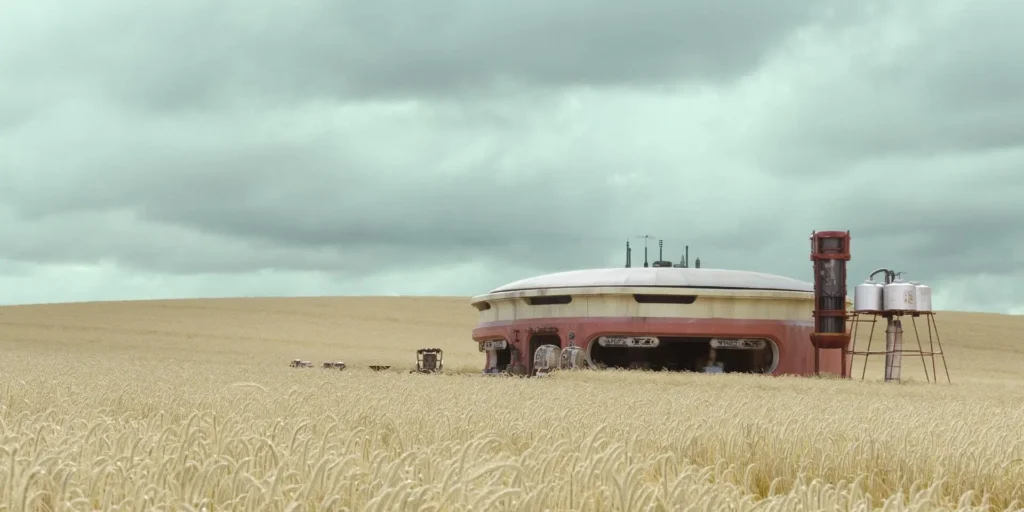
Andor was shot entirely without StageCraft. Gilroy and his production designer built massive practical sets at Pinewood and travelled to real locations including Scotland, where the cast and crew hiked for hours up mountains to capture single shots. Diego Luna described the experience: “Everything is mechanical. You’re interacting with real stuff.” Fiona Shaw, who played Maarva, noted her character’s house was built from parts of old spaceships: “I used to go out and just stare at it. Breathtaking.”
The result is the most cinematically expansive Star Wars production since the original trilogy. Andor has genuine geographical scale, real atmospheric depth, and the textural specificity of physical environments. Gilroy was careful not to frame the decision as an attack on the technology: “Nobody’s against the Volume — the Volume is fantastic for the things that it’s for. The problem is right now there is no good way to do both. You kind of have to make a decision to be a Volume show or a non-Volume show.” The choice was economic as much as aesthetic — building out from actors in practical locations, as Gilroy’s team did, is incompatible with a Volume-first production pipeline. But the results made the cost plain. Andor does not look like a streaming show. It looks like a film.
Ahsoka: When the Volume Works Against You
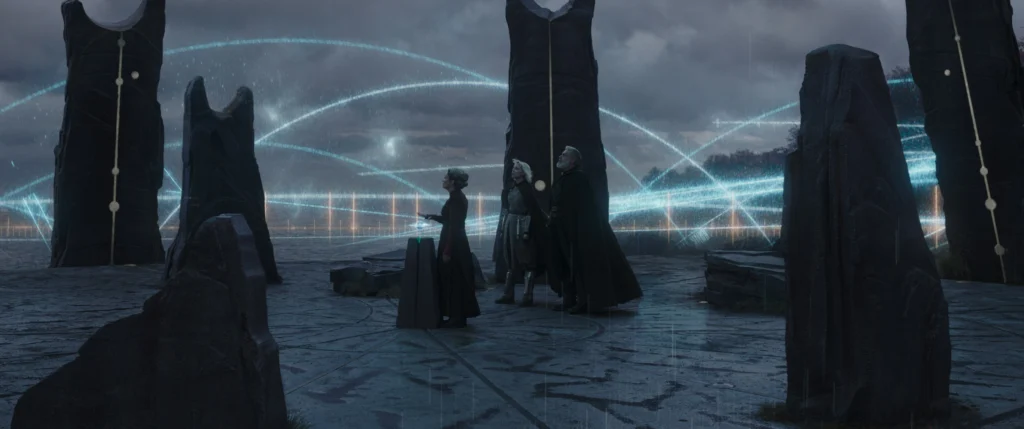
Ahsoka Season 1 demonstrated two distinct failure modes, both of which were identified not by critics writing on deadline but by viewers watching closely — the audience that tends to know this craft better than most reviews give them credit for.
The first failure mode is visible in the Seatos reflex point — the henge where Morgan Elsbeth activates the star map to locate Thrawn. The set is a circular stone structure with radial lines and a central pillar, projecting a holographic star map into the space above it. It is, in other words, a self-contained circular set with controlled overhead space and a contained sightline — a shape almost purpose-built for the Volume’s semicircular geometry. Production documentation confirms this wasn’t coincidence: the set was designed explicitly as a Volume asset, with multiple pre-built lighting variants (night, late morning, late afternoon) baked into the workflow before a frame was shot. The Volume excels when the set is designed to fit inside it. But that logic runs backwards. Story environments should determine set design, not the other way around. When the technology begins shaping the architecture of a Star Wars world, something has inverted. The henge on Seatos looks the way it does not because that’s what Seatos demanded, but because that’s what the stage could accommodate.
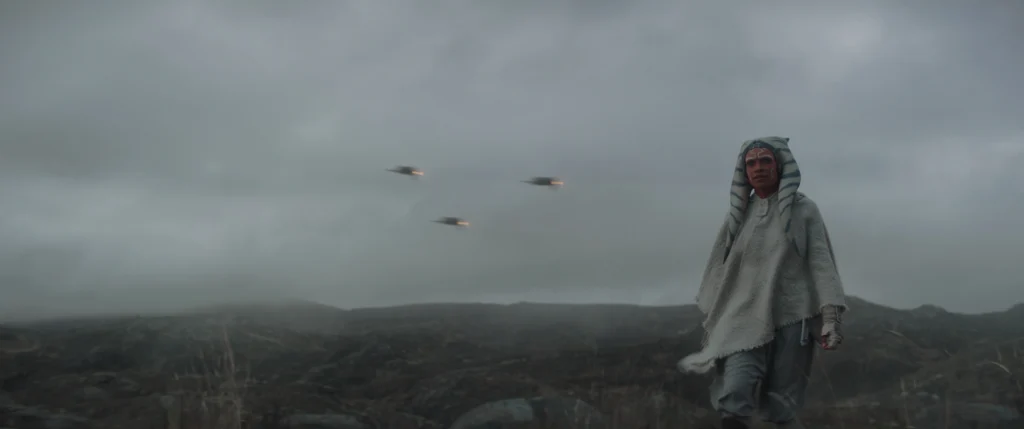
The second failure mode is starker, and harder to miss once you see it. All of Ahsoka‘s locations — the ruins of Arcana, the plains of Lothal, the dark forests of Seatos, and crucially the plains of Peridea — were filmed in and around Los Angeles on the StageCraft stage. Peridea, the distant galaxy that forms the second half of the season, is meant to feel ancient, remote, and geographically vast. The extended sequences of Ezra Bridger and the Noti clans travelling across its surface make the limitation plain: the background is effectively the same image of grey flatlands, scrolling in one direction as the characters walk. There is no depth recession, no atmospheric change, no sense of a world that extends beyond the camera’s eye-line. Critics noted the overall flatness; what engaged viewers spotted was the mechanism producing it — an environment that doesn’t behave like a traversed landscape because it isn’t one. It’s a backdrop on a stage, cycling as the characters move. An entire alien wilderness collapsed into the visual grammar of a conveyor belt.
The overcast, grey skies dominating the Peridea sequences are not just a tonal choice — they reflect the Volume’s inability to convincingly render hard outdoor sunlight. The Volume can only simulate soft, even light sources. Peridea needed a sky. The stage gave it a ceiling.
Lucasfilm appear to have absorbed the lesson. For Ahsoka Season 2, production relocated entirely to the United Kingdom. Peridea was rebuilt as a large-scale physical set outdoors, surrounded by blue screens rather than LED walls. Reports from the set describe a construction of enormous scale — the van visible in the background of production photos used as a scale reference against the set’s height. The shift represents a direct acknowledgement that the first season’s most significant visual environment should never have been shot in the Volume.
The Mandalorian and Grogu: The Technology Grows Up
The 2026 theatrical film The Mandalorian and Grogu — directed by Favreau, shot by David Klein — represents the most mature deployment of StageCraft to date, and the clearest evidence that the original innovators have learned from the technology’s failures as well as its successes.
The film used a hybrid approach from the outset. StageCraft remained central to the production’s studio work at Manhattan Beach, where the camera tracking system and real-time Unreal Engine rendering delivered the technology’s native strengths: intimate character scenes, interior environments, and the beskar armour sequences that benefit directly from correct, real-time environmental reflections. The LED walls illuminate Pedro Pascal’s helmet with the actual light of the environment his character inhabits — not a reflection painted on by a VFX artist in post.
But the production also returned to Death Valley and other real locations for sequences requiring genuine scale and outdoor light. The film’s $165 million theatrical budget, against the series’ TV budgets, enabled a scope the Volume alone could never deliver.
The Mandalorian and Grogu film is not a rejection of StageCraft. It is something more useful: a demonstration of the technology used for what it actually does well, in combination with the methods it cannot replace.
What the Industry Learned
The Mandalorian was the first production to use a fully immersive semicircular LED stage as its primary production method. By necessity, the people who made it were figuring out the technology as they used it — and audiences were watching closely enough to see the learning curve in real time. The limited spatial arrangements of early sequences, the recurring semicircular geometry visible in set design, the controlled atmospheric conditions that made Seasons 1 and 2 feel like they were shot inside the same weather system — all of it was visible to anyone paying attention. Course corrections followed. That is not a failure. That is what first-mover adoption of a genuinely new technology looks like.
What the Volume does well is worth stating clearly, because the criticism of the overuse era can obscure it. The technology’s single most underappreciated capability is atmospheric control. A script demands a scene shot in golden hour light on an alien world. On a real location, golden hour lasts fifteen minutes on a good day — and that’s before accounting for cloud cover, the time needed to dress the set, the takes required to get the performance right, and the reset between setups. On the Volume, golden hour lasts as long as the shoot requires. The DP dials the colour temperature and intensity in real time. The director calls for a slightly cooler sky, or more diffusion on the horizon, and the Brain Bar delivers it between takes. No location on Earth offers that. The script says rain: the Volume provides rain, without a weather unit, without waiting, without the continuity problem of a real weather window that closes before the coverage is complete. This is not a compromise version of location shooting. It is something location shooting cannot do at all.
The failures came when productions applied that capability indiscriminately — using the Volume for environments where its limitations were more visible than its strengths. Vast organic landscapes, hard outdoor sunlight, sequences requiring genuine spatial depth: these are not what the technology was built for, and the productions that discovered this the hard way did so in public.
StageCraft excels in controlled interior environments, close and medium-shot coverage in non-organic settings, and any sequence where real-time environmental lighting directly benefits performance. Star Wars‘ native vocabulary — metal, rock, droids, spacecraft — plays directly to its strengths. It struggles with hard sunlight, organic environments, genuine geographical scope, and productions where the story’s tonal register demands the texture only real locations provide. The productions that understood all three categories — what the Volume does, what it can’t do, and what it does that nothing else can — used it well. The ones that only understood the first two are the cautionary cases.
The broader lesson is the one Tony Gilroy articulated in 2022: the Volume is not a default. It is a specific tool. Favreau, who pioneered it, has said as much consistently and without defensiveness — the story dictates the method, and the method serves the story, not the other way around. The productions that inverted that logic produced results that are already dating. The productions that held to it — or rejected the Volume entirely in favour of what their stories required — produced something that looks and feels like it was made for the screen.
StageCraft, in conjunction with Jon Favreau and Greig Fraser’s innovations, has pushed the boundaries of what is possible inside a studio. It has also, in the hands of filmmakers who understood it, demonstrated that the boundary between a stage and a world can be made to disappear. What the industry learned — slowly, and sometimes in public — is that making that disappear requires knowing exactly where it is.


- Why Robert Pattinson’s Batman Should Be DCU’s Caped Crusader - October 12, 2026
- California’s AG Loses to Paramount: Inside the Paramount / Warner Bros. Discovery Merger — And Why Ellison May Still Leave California - September 26, 2026
- Napoleon Solo Sold for £1: The Year Ian Fleming Stopped Owning Ian Fleming - July 25, 2026