The DB5 Before 007: David Brown’s Legacy of High-Speed Ambition
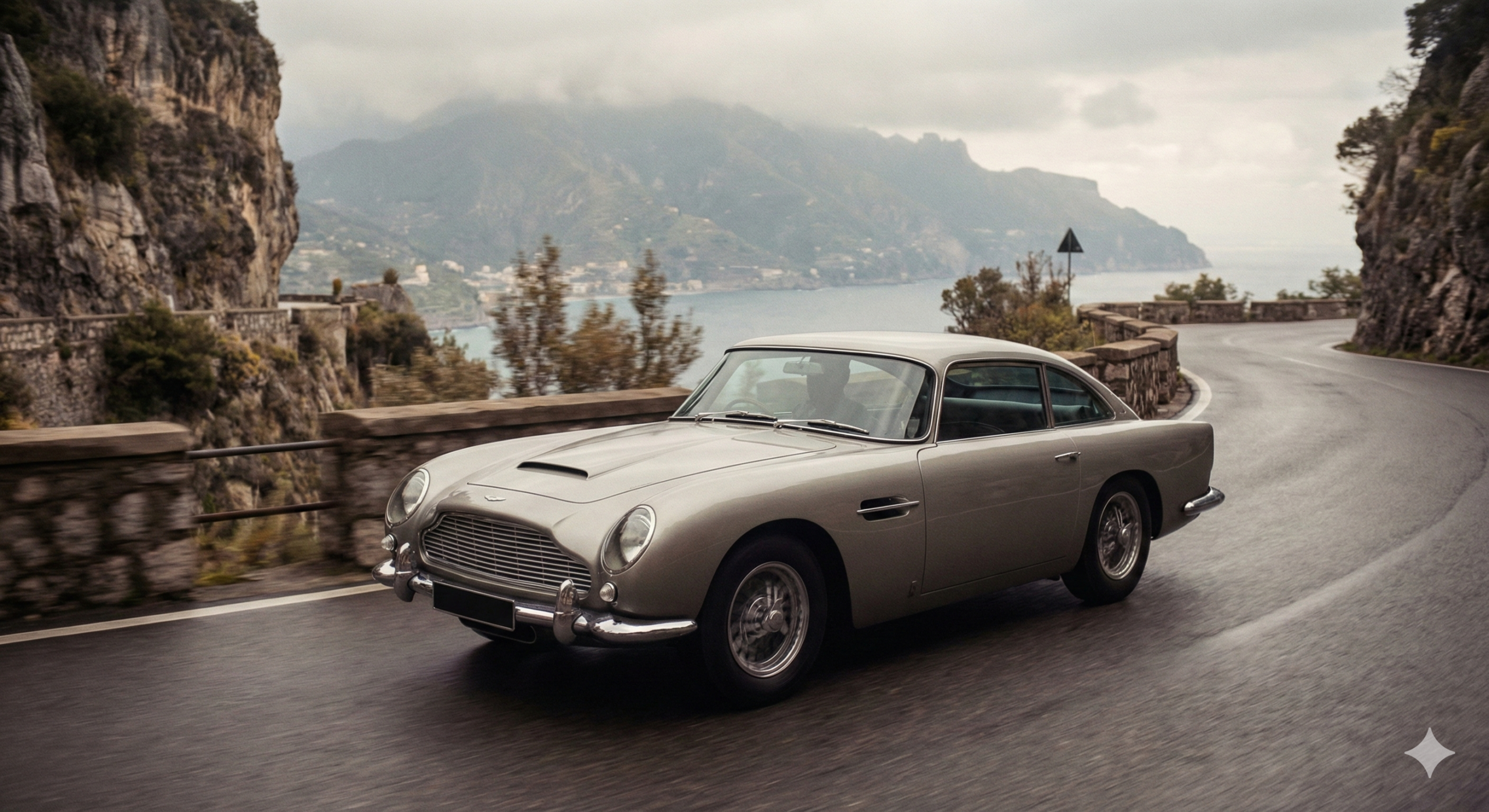
Before it became the lethal extension of a cinematic super-spy, the Aston Martin DB5 was a masterclass in Italian-inspired British engineering produced by a company struggling to make the economics of hand-built perfection work.
In 1964, owning an Aston Martin was a membership to a very exclusive club, but the company itself was fighting for its life. Supported largely by the tractor fortune of its owner, Aston Martin was bleeding money in its pursuit of the ultimate Grand Tourer. They were building cars for a world of unrestricted speed, but they were doing it on a shoestring budget while competing against the industrial might of Jaguar and Ferrari. The DB5 was their attempt to perfect the formula before the money ran out.
The Tractor Tycoon’s Gamble
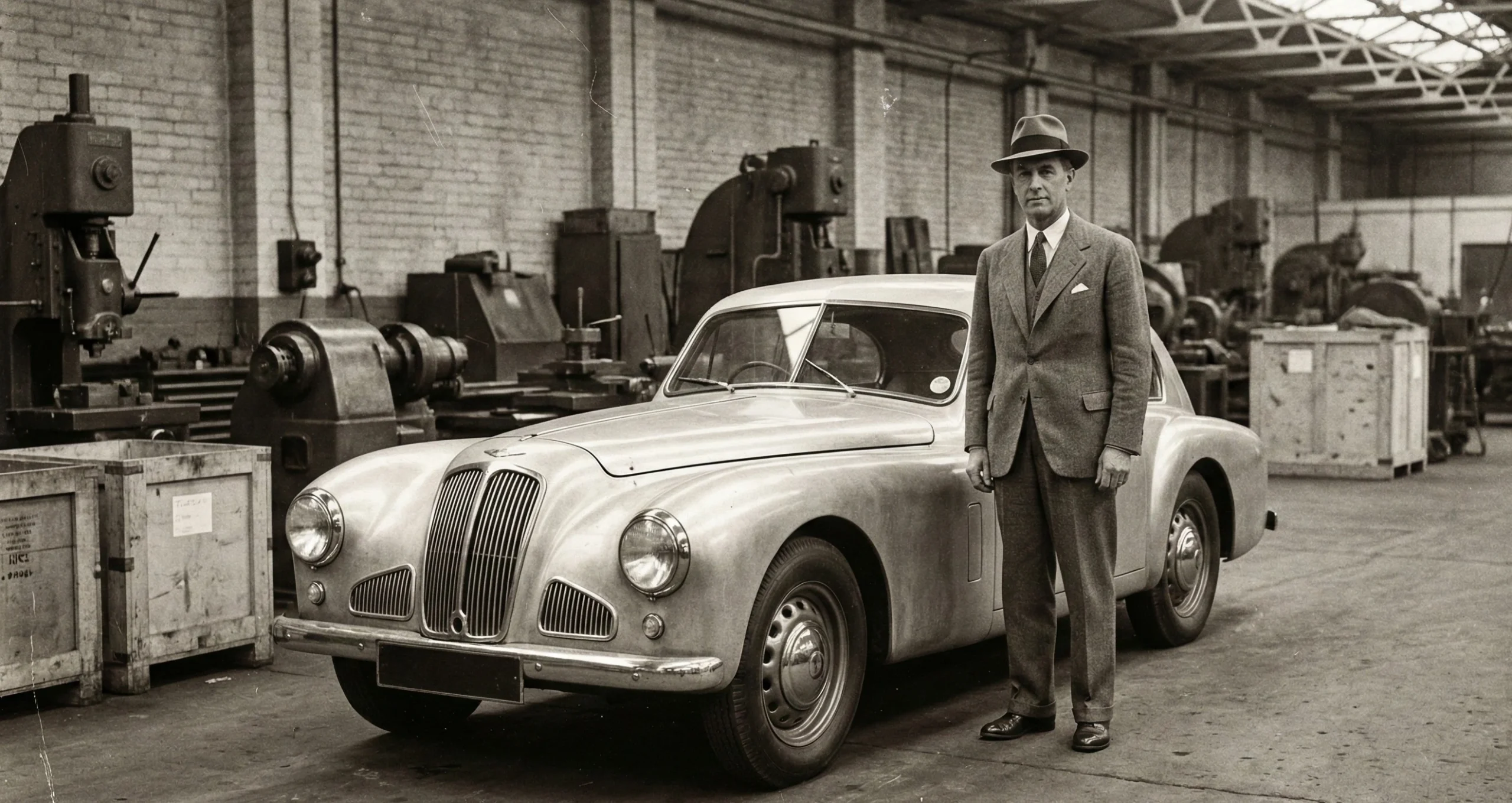
The company’s survival had always been precarious. It was sparked by a simple classified ad in The Times on October 1st, 1946: “High Class Motor Business Established 25 Years… Price £30,000.”
David Brown, a wealthy Yorkshire industrialist whose factories produced tractors and gears, answered the ad. A trained engineer who had raced cars and motorcycles in his youth, Brown saw potential where others saw bankruptcy. He bought Aston Martin for £20,500. At the time, the company’s only asset of note was a prototype called “The Atom.” It was an ugly car with a four-cylinder engine, but the chassis was brilliant. Brown clothed it in a handsome convertible body to create the DB1, but he knew it lacked a heart.
The solution came from another distressed sale. When the legendary Lagonda company was liquidated, Brown placed a lowball bid of £53,000. He didn’t want their buildings; he wanted their masterpiece: a new six-cylinder twin-cam engine designed by W.O. Bentley. By marrying Aston’s chassis to Bentley’s engineering, the “DB” lineage was born.
The Design Pivot: From “Bubble” to “Superleggera”
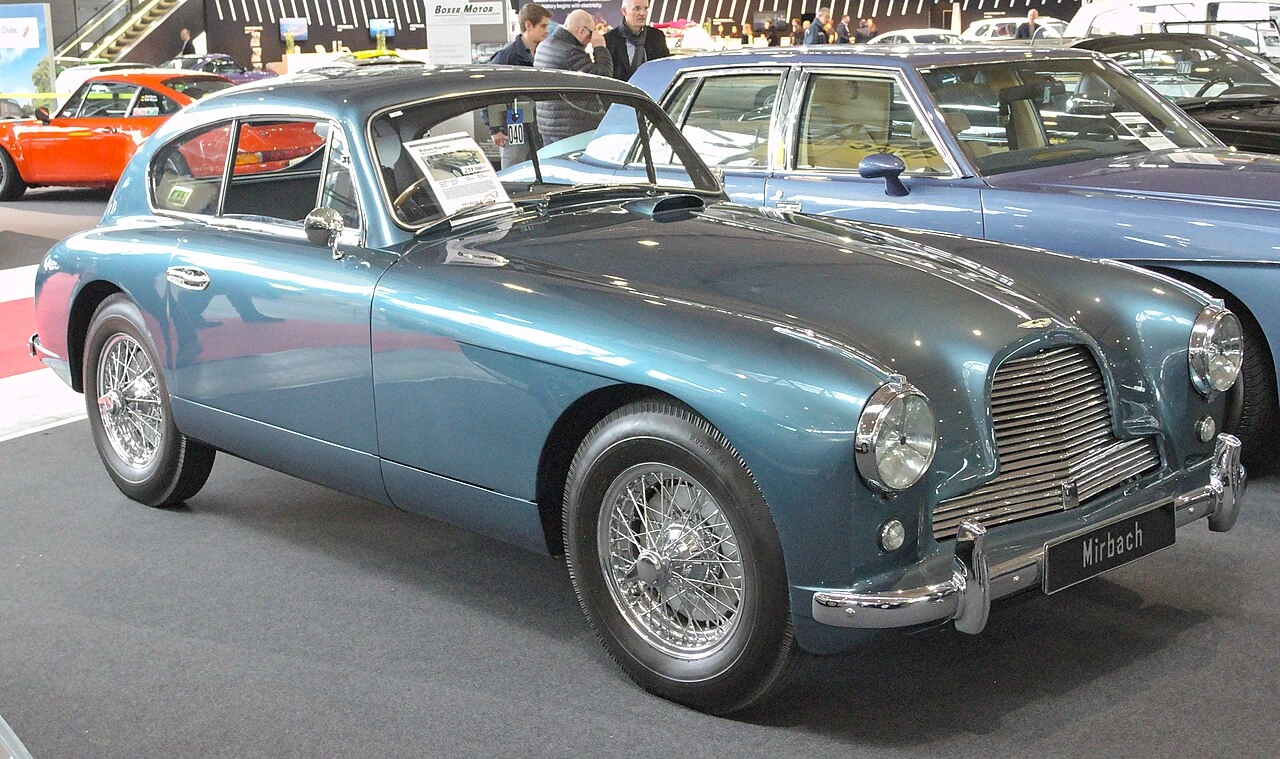
Throughout the 1950s, the DB2 and its variants—the “bubble” cars designed by Frank Feeley—were the mainstay of the company. They were rounded, aerodynamic racers that secured Aston Martin the Sports Car Championship and a 1959 Le Mans victory with Carroll Shelby at the wheel.
But by the end of the decade, the “bubble” look was aging. To survive the 1960s, Aston Martin needed a clean sheet. They designed a new chassis in-house but looked to Italy for the style, partnering with Touring of Milan.
The collaboration was a clash of cultures. When Aston engineers presented their new tube chassis, the Italians famously told them to scrap it, calling it “junk” that wouldn’t work with their construction methods. Aston Martin listened. They started afresh, building a rigid platform chassis—welding the floors, sills, and bulkheads into one solid unit. On top of this, Touring applied their Superleggera (Super-light) system: a skeletal “birdcage” of pencil-thin steel tubes wrapped in hand-hammered aluminum sheets.
Refining the Beast: The M1 Wake-Up Call
The transition from the DB4 to the DB5 was born from a collision between engineering ambition and a sudden change in British infrastructure. The DB4’s all-aluminum engine was a masterpiece of lightweight design, but it had a fatal flaw: it struggled to shed heat under constant load.
When the DB4 launched in 1958, this wasn’t apparent because British roads were twisting A-roads where you could only hit top speed for seconds at a time. But in November 1959, the M1 motorway opened—right on the doorstep of Aston Martin’s Newport Pagnell factory.
For the first time, drivers could legally sustain 100+ mph for an hour straight (there was no 70 mph speed limit yet). The result was catastrophic. The sustained high RPMs caused the oil to overheat, thin out, and starve the bearings. Because the factory was next to this new “public test track,” the feedback loop was immediate. Engineers didn’t need warranty reports from Italy; they had cars failing just miles from the factory gates. They realized the DB4 wasn’t just a sports car anymore; it had to be an endurance cruiser.
The DB5 was the direct mechanical response to the M1. Tadek Marek, the company’s engine designer, enlarged the displacement to 4.0 liters for torque, reducing the need for high RPMs. Crucially, they made oil coolers standard equipment and eventually added the ZF five-speed gearbox to let the engine relax at 100 mph. The car was literally engineered to survive the new age of the motorway.
The Golden Touch
Did the DB5 turn Aston Martin’s fortunes around?
Culturally, yes. Financially, it bought them time.
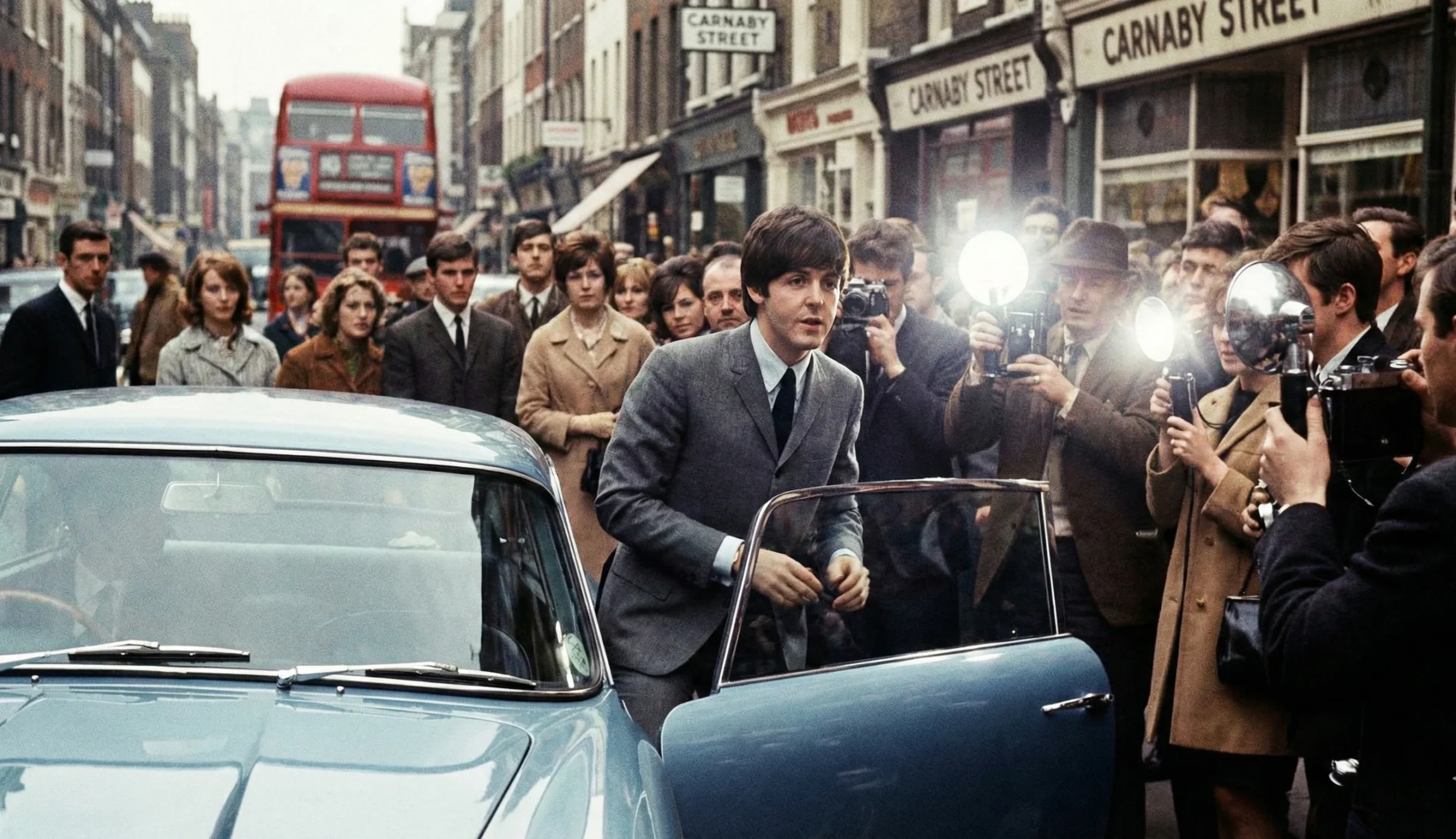
The DB5 was already the “gold standard” of British motoring before Bond ever got behind the wheel. It was the choice of the “Rock Aristocracy”—Paul McCartney famously ordered his Sierra Blue DB5 in the summer of 1964, taking delivery just days after the Goldfinger premiere.
But without the Golden Touch of 007, the DB5 likely would have remained a niche masterpiece, admired by collectors but largely unknown to the public. The film didn’t instantly fix the company’s “struggling economics”—David Brown eventually had to sell the business in 1972—but it gave the brand an immortality that money couldn’t buy. Bond turned a great car into a legend, ensuring that while the business of hand-built perfection remained difficult, the demand for it would never die.