The Full Story Behind James Bond’s Greatest Stunt
The Spy Who Loved Me is widely hailed as Roger Moore’s finest hour as 007—and one of the crown jewels of the entire Bond franchise. Albert R. “Cubby” Broccoli, free of his producing partner Harry Saltzman, went all in for Bond’s tenth cinematic mission. The film was make or break for the Bond series. The previous film, The Man With The Golden Gun, almost ended the whole series with the worst box office performance in the series’ history.
Broccoli had no intention of playing it safe. Instead, he decided to make the biggest Bond yet. The Spy Who Loved Me is a greatest hits package celebrating everything Bond: his British-ness, the best in Bond Girls, the coolest gadgets ever seen, and an absolute bonkers, globe-trotting plot involving an ocean tanker that swallows nuclear submarines to trigger World War Three. The result? The biggest box office success in the series’ history up to that point—and proof that James Bond was back on top.
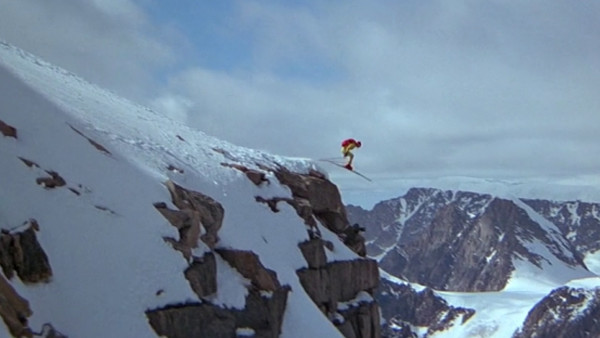
The only way to open a film this brash was to conceive the greatest stunt ever seen on film: a jaw-dropping ski-jump off the top of a mountain culminating with Bond opening a parachute emblazoned with the Union Jack.
View any list of Bond’s top ten stunts and nine times out of ten this stunt takes its rightful place as number one. To this day, in a film franchise filled with incredible stunts, it is easy to see why the skiBASE jump ranks as number one. No tricks. No camera cheats. Just one take, one man, and one breathtaking leap from a real mountain in Baffin Island, Canada.
Here’s how that legendary moment came to life—and why filming it was almost as dangerous as the stunt itself.
The Idea Came From Playboy
Those familiar with James Bond know the character’s long history with Playboy magazine. And considering Bond’s love for the ladies and the plentiful use of double entendres and dodgy names for Bond Girls through the 1960s and 1970s, Playboy seemed right at home for Roger Moore’s James Bond.
Broccoli’s stepson, Michael G. Wilson, who had been with the family firm, EON Productions, since Goldfinger, came across a Playboy magazine advertisement for Canadian Club Whiskey featuring a daredevil skier leaping off Mount Asgard in the Canadian Baffin Mountains. He showed it to Cubby. Broccoli loved the image, and Wilson soon tracked down the skier responsible: Rick Sylvester.
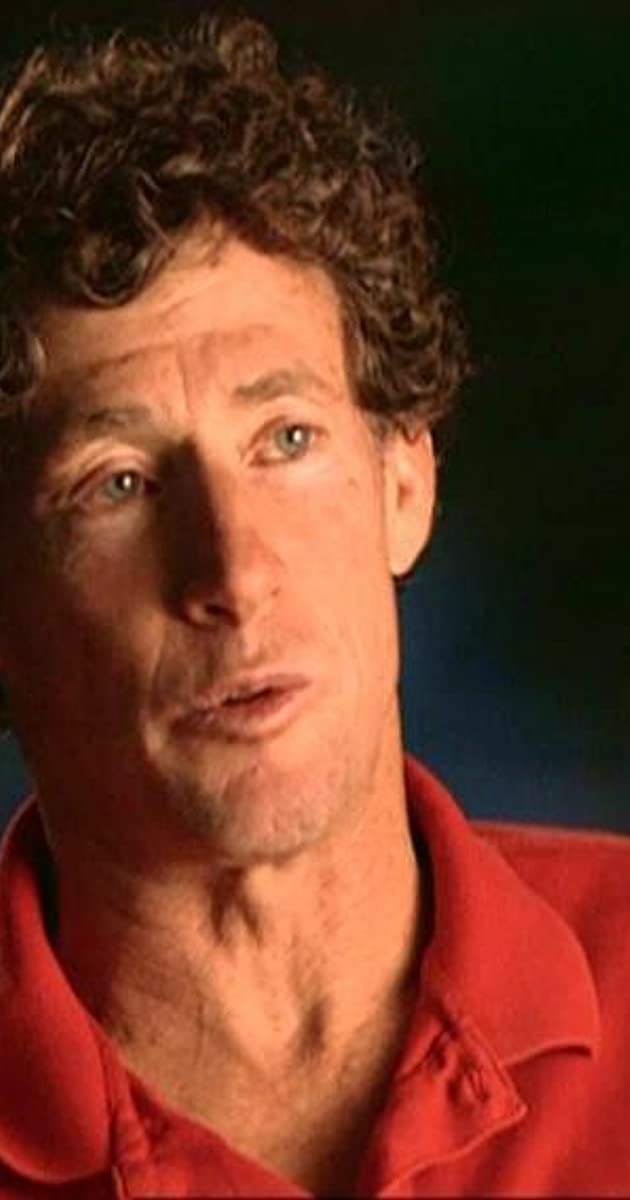
Wilson invited Sylvester to London and asked him if he wanted to do it. The recently unemployed Sylvester accepted.
Sylvester was an unassuming adventurer, not a Hollywood stuntman. He’d first performed a similar jump off El Capitan in Yosemite in 1972—just for fun. “It was my creation,” he said. “I didn’t see it as a stunt; it was an outdoor mountain adventure.” He’d done the jump twice more for his own record and a third, aborted attempt for the Canadian Club ad in Playboy. When EON came calling, Sylvester was out of work. The offer to do it for Bond changed his life forever.
Sylvester, the modest adventurer who saw himself as just “a climber, a skier”, would go down in the record books as one of the world’s greatest stuntmen.
200 Feet Just Isn’t High Enough
John Glen, who later directed five Bond films, headed the second unit on The Spy Who Loved Me. The unit had the tough mission of filming the stunt, which in itself was a feat to almost rival Sylvester’s ski jump! But first came the meeting at EON’s London offices with Broccoli, Wilson, and the film’s director, Lewis Gilbert, and Sylvester.
Glen suggested a familiar spot: a 200-foot cliff in Switzerland’s Lauterbrunnen Valley, used for the bobsled sequence in On Her Majesty’s Secret Service. Sylvester shook his head. Too short. He proposed returning to Mount Asgard, the towering Canadian monolith where he’d jumped before.
Mount Asgard, with its twin cylindrical peaks and icy isolation, has an elevation of 2,015 m (6,611 ft), and, therefore, was a far more exciting and dangerous proposition. Sylvester told Glen they could only be there for six weeks because the rest of the time it’s snowed in, and the weather can be dangerous.
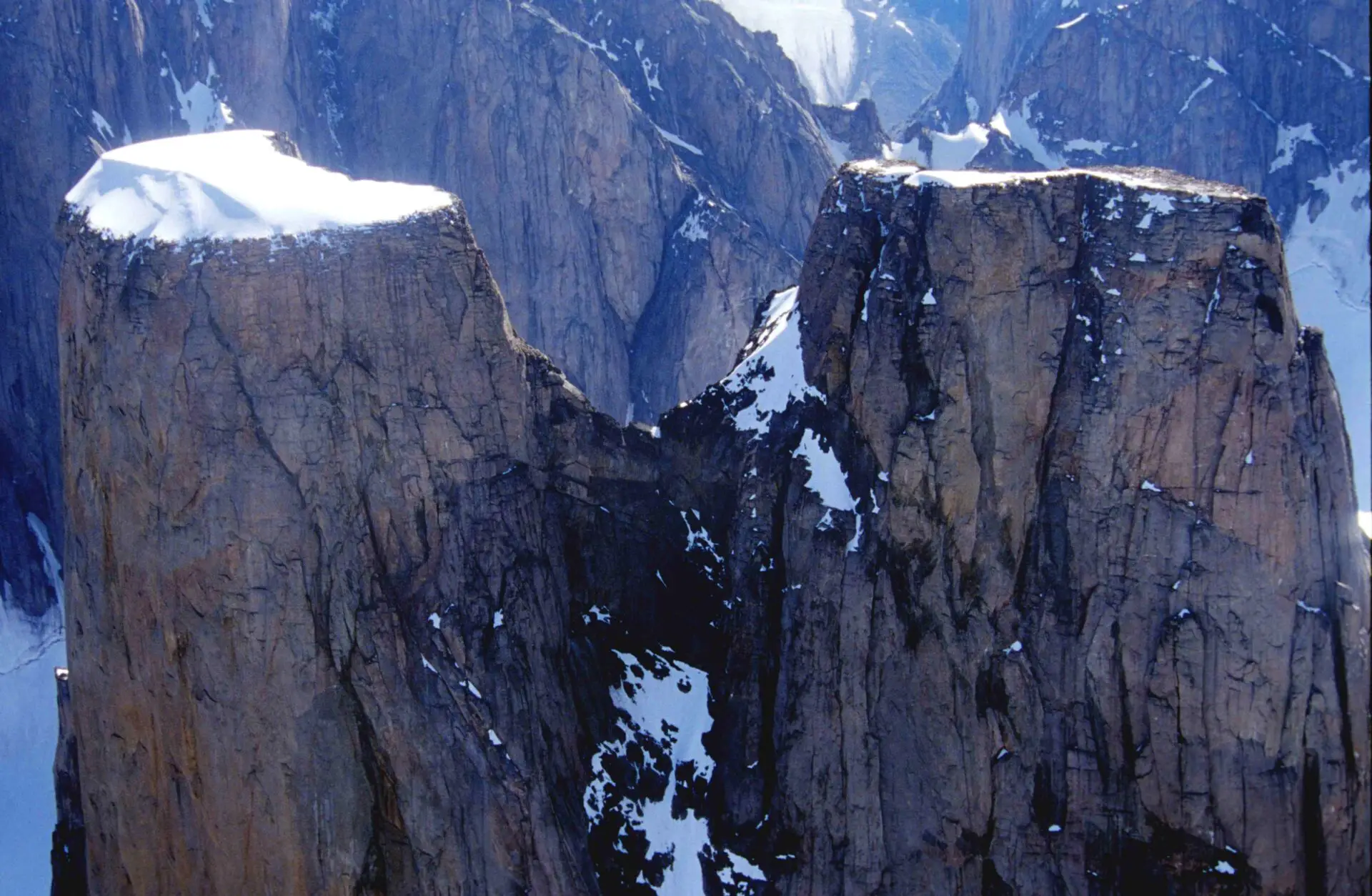
“None of us were totally convinced,” said Glen. “That’s why we went out to Canada on an initial survey. And we went to the actual mountain, and we landed on the mountain. And we did all the tests we could do. And I kept looking at him, and saying, ‘Are you sure you can do this Rick?’ And he said, ‘Oh yes. I can do it.'”
“They did this test footage of me standing on the edge of that sheer cliff in a bright red parka,” said Sylvester. “That test footage came out so spectacular.”
“We went back with this footage,” continued Glen. “And Lewis and Cubby and the Head of United Artists, Dan Rissner, disappeared into the theater and looked at our material. And we waited outside. We weren’t allowed in. And they came out after ten minutes and they said, ‘Do it.'”
The filming of the stunt was scheduled to occur months before the rest of the film. “Lewis Gilbert’s idea was, ‘Well if that doesn’t work, we have plenty of time to figure out something else,” said Wilson.
But with a budget of $250,000, everyone involved wanted to get the stunt right.
Filming Is Almost As Dangerous As The Stunt Itself
The second unit flew to the top of Mount Asgard. The top is a plateau, perfect for the end of the ski chase where Bond takes flight off the precipice. Immediately there were problems with the weather. But as the second unit’s director of photography, Alan Hume, recalled in his book, A Life Through The Lens: Memoirs of a Film Cameraman: “standing on that mountain going snowblind–as everything around us was totally white–I wondered if we’d made the right decision.“
The crew had a minimal amount of time to capture the stunt. The light had to be right. Hume added:
“We knew that it would take about two hours to set up and film the jump from the time we got ‘thumbs up’. As the light was gone off the mountain by 2 P.M., our days were short. Ten days passed and we hadn’t achieved the conditions we needed to film. My camera crew were poised like coiled springs–we had three cameras out there with us, including one in a helicopter–and so with time ticking on, we decided to base ourselves at the foot of the mountain so as to reduce preparation time. Tents were flown in for us from Montreal and we set up camp. It was so cold that we moved into just one of the three tents, huddling together in order to keep warm. It was a small tight-knit crew including Rick Sylvester, a doctor, my camera operator Brian Elvy, a Canadian camera operator and two mountaineers.”
The weather was so bad that they had no lines of communication with London. Two more weeks passed as the weather worsened. The crew could no longer camp at the bottom of the mountain, so each night they flew back to their home base in Pangnirtung.
Broccoli, who had made many attempts to call the unit, finally got through. He was worried Sylvester had cold feet. But Sylvester reassured him, ‘I’m only waiting for the wind!’ The studio was far from reassured. Time is money, and each day the costs increased. They kept pressuring Broccoli. ‘Has he done it yet?’ ‘Is he ever going to do this?’
As the budget continued to soar and the weather continued to delay the shoot, Glen started to look for other options. He suggested filming on other mountains which could be useful for cut-away shots later. But while they were on a neighboring summit, the weather suddenly cleared over Mount Asgard. Immediately, the crew quickly transported the film equipment to the mountain.
“All was ready on the mountain,” Hume recalled. “Safety checks were made. Cameras were set up. I jumped on board my camera helicopter, our Canadian camera operator mounted his camera under the huge precipice, and John was with Brian on the third camera. The light was fading fast. It really was now or never.'”
The Shot Is Lost…Almost
Glen, who was holding a red flag, told Sylvester over a radio: “Don’t go until you see this red flag is buried in the snow whatever you hear on the radio or whatever you think you hear.” When all the cameramen and crew were ready, Glen shouted to Sylvester over the walkie-talkie: “Remember you’re James Bond.”
Glenn planted the flag into the snow. Sylvester didn’t need any more encouragement. He skied right off that precipice into the cold void below.
The sight was spectacular for the crew. But there was a problem. The cameraman in the helicopter failed to capture Sylvester, who had skied over the top of the camera’s field of vision. With the master shot gone, Glen hoped the other three cameras had caught the shot. Only one other camera managed to follow Sylvester all the way off the precipice, zoom in and follow him all the way down. It was one take and uncut. And it had captured the stunt perfectly.
On the film’s release in 1977, audiences all around the world agreed.
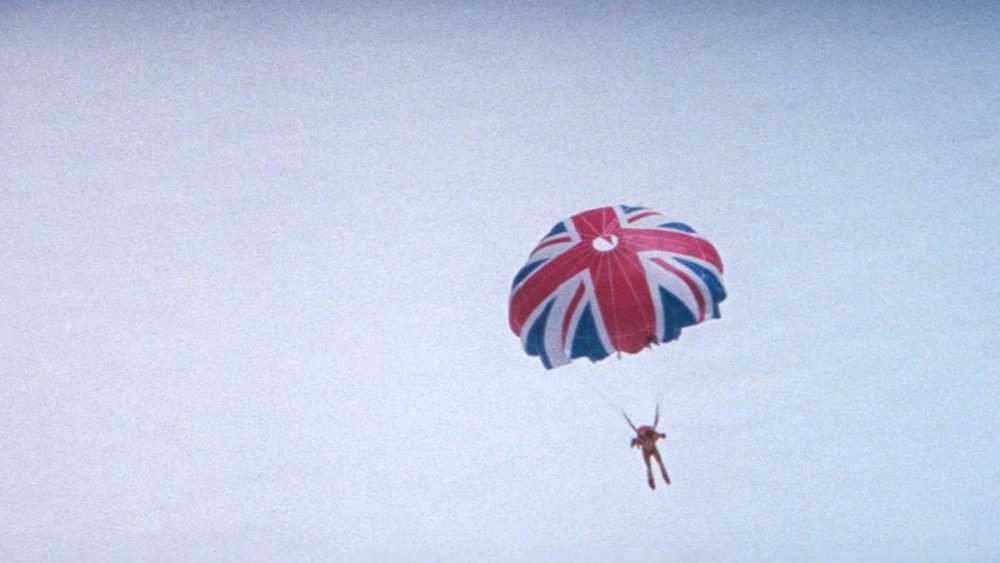
Screenwriter Christopher Wood, who added the nice touch of the Union Jack parachute opening at the end said:
“All over the world whenever I saw the movie, instead of people howling and throwing stones at the Union Jack they were bursting into a spontaneous applause.” The Spy Who Loved Me reinvigorated interest in James Bond, and the ski jump has become one of the most iconic moments in a string of iconic moments in the Bond film franchise.