How Scream Saved Horror by Explaining — and Subverting — the Rules
By the mid-1990s the slasher genre had run out of scares. Then a film arrived that did something radical: it explained the rules of horror — and then began breaking them.
Now thirty years later, the Scream franchise is still going strong with the release of Scream 7 and the return of its original heroine Sydney Prescott.
By the mid-1990s, horror was dying.
The slasher boom that had dominated the late 1970s and 1980s — Halloween, Friday the 13th, A Nightmare on Elm Street — had burned itself out. By the early 1990s the genre had become a graveyard of tired sequels and increasingly absurd mythology.
Audiences had learned the formula.
The masked killer.
The clueless teenagers.
The final girl.
Everyone knew the tricks.
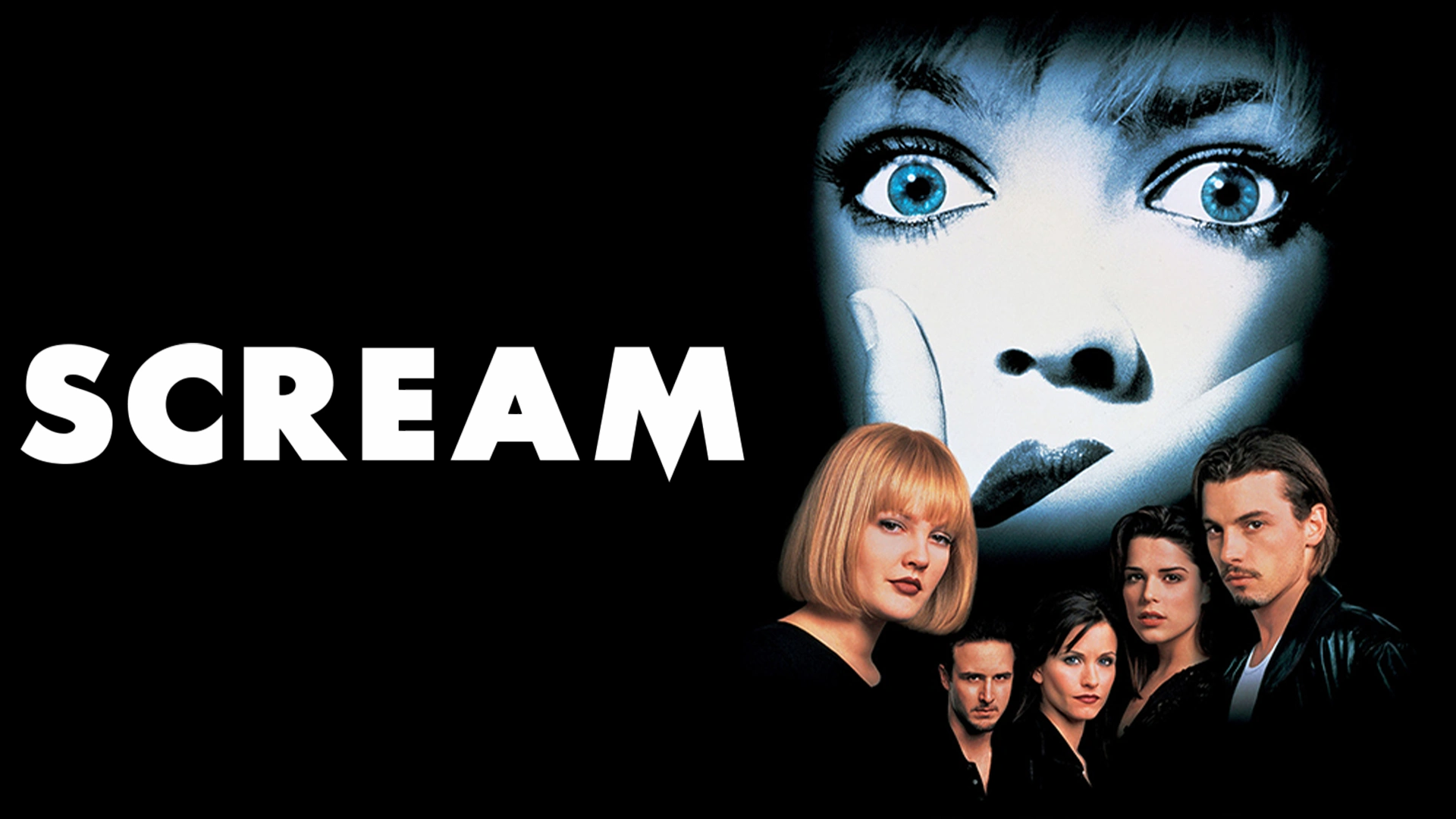
So when Scream arrived in December 1996, it did something radical.
Instead of pretending the audience didn’t know the rules…
it made the rules the entire point of the story.
The Slasher Genre Was Already Dead
By the early 1990s, horror had lost its cultural momentum.
Even the icons of the genre were struggling.
Films like Freddy’s Dead: The Final Nightmare leaned heavily into comedy and self-parody, turning Freddy Krueger into a wise-cracking caricature of the monster who had once terrified audiences.
Meanwhile Jason Goes to Hell: The Final Friday attempted to reinvent the Friday the 13th franchise with a bizarre supernatural twist that allowed Jason Voorhees to possess other bodies.
The result was confusion rather than fear.
The monsters that had once defined the genre were no longer frightening.
They had become familiar.
And familiarity is poison for horror.
Horror Was Struggling to Break Through
Despite the genre’s decline, horror films continued to appear throughout the early 1990s.
Some were even critically praised.
One example was Candyman, directed by Bernard Rose and based on a story by Clive Barker.
The film explored the power of urban legends and featured a chilling performance by Tony Todd as the hook-handed killer.
Candyman earned praise from critics and developed a loyal following.
But commercially it remained modest.
The film grossed around $25 million worldwide, respectable numbers for a horror film but far from the kind of cultural breakthrough the genre had once produced.
The same pattern repeated across the decade.
Horror films still existed.
But few were becoming events.
The Experiment That Audiences Missed
Just two years before Scream, director Wes Craven himself attempted to reinvent the genre with Wes Craven’s New Nightmare.
Instead of another traditional sequel, the film told a strange story in which Freddy Krueger begins to invade the real world — targeting the actors and filmmakers who created the Nightmare on Elm Street films.
Actors such as Heather Langenkamp appear as themselves, blurring the boundary between fiction and reality.
Critics admired the film’s ambition.
But audiences largely stayed away.
New Nightmare earned only about $19 million worldwide, making it one of the lowest-grossing entries in the Elm Street series.
The genre was clearly searching for a new direction.
But it hadn’t found one yet.
The Phone Call That Created Scream
The idea for Scream began with a moment that felt like something out of a horror movie itself.
In 1994, struggling screenwriter Kevin Williamson was house-sitting alone when he watched a television documentary about the Gainesville Ripper.
The story unsettled him.
Then something strange happened.
Williamson noticed a window in the house standing open — one he believed he had closed earlier.
Alarmed, he grabbed a knife and called a friend while the two of them began talking about their favorite horror movies.
That eerie moment became the seed of what would eventually become the film’s legendary opening scene.
Within days Williamson began writing a screenplay titled Scary Movie, which later became Scream.
Much of the script came together quickly, drawing on his deep knowledge of horror films and the patterns they followed.
Williamson later admitted he never expected the screenplay to become a phenomenon.
“I never thought it would be a hit actually. I was just trying to get a job. I was just trying to write a script to get noticed by Hollywood.”
Enter Wes Craven
Eventually the script reached Wes Craven, already one of the most important filmmakers in horror history thanks to A Nightmare on Elm Street.
Craven immediately recognized the potential in Williamson’s idea.
Instead of hiding horror clichés, the film exposed them.
Craven later explained the concept behind the story:
“What it forces you to do is sort of look at the reality of things we typically look at as amusing… like the Friday the 13th type of deaths… and suddenly that starts happening in their actual lives.”
This was an idea he had tried himself just a year earlier with his New Nightmare, which is no doubt what caught his attention.
For Craven, Scream wasn’t simply another slasher movie.
It was a slasher movie about slasher movies.
A Deconstruction of Horror
Williamson himself described the screenplay as an attempt to reinvent the genre.
“Scream was a new way of doing a horror film — a deconstruction.”
Instead of hiding the mechanics of horror storytelling, the film places them front and center.
Characters debate horror clichés.
They analyze famous horror films.
They even attempt to predict their own survival chances.
In one of the film’s most famous scenes, Randy explains the rules for surviving a horror movie:
Never have sex
Never drink or do drugs
Never say “I’ll be right back”
Scream didn’t destroy the genre.
It exposed it.
The Opening Scene That Changed Horror
If Scream explains the rules of horror, its opening scene is where the film begins breaking them.
The sequence starring Drew Barrymore remains one of the most shocking openings in modern cinema.
At first, the scene unfolds like a miniature slasher movie.
Barrymore’s character Casey Becker receives a mysterious phone call from a stranger asking trivia questions about horror films. The conversation slowly turns sinister, and before long the masked killer known as Ghostface is stalking her house.
The scene follows the familiar rhythm of classic horror.
Casey’s boyfriend is tied to a chair outside.
The killer enters the house.
The heroine fights back.
Then Casey escapes.
She runs out of the house and across the yard, wounded but alive. For a moment the scene feels like it’s following the structure of earlier slasher films such as Halloween, where the heroine survives a brutal encounter with the killer.
Casey even sees her parents’ car pulling into the driveway.
Safety seems only seconds away.
Then the killer appears behind her.
The knife flashes.
Moments later her parents arrive to find her body hanging from a tree as the title SCREAM slashes across the screen.
The moment is devastating because the scene has been carefully structured to make the audience believe Casey might survive.
In another horror film, she probably would have.
Instead, Scream kills the character who seemed destined to be the movie’s heroine. Barrymore was the most famous actor in the film–but it is pure misdirection and subversion.
Before the story has even begun, the film announces something important to the audience.
The old rules no longer apply.
The Final Girl Who Breaks the Rules
But Scream doesn’t stop at explaining the rules.
It begins breaking them.
The most important way it does this is through the film’s heroine Sidney Prescott, played by Neve Campbell.
In classic slasher films the heroine typically survives by enduring the horror rather than defeating it.
A good example is Halloween, where Laurie Strode survives the night but Dr. Sam Loomis ultimately stops the killer.
Sidney Prescott changes that.
Killing the Villain — and the Old Rules
At the climax of Scream, Sidney confronts the killer Billy Loomis.
The name itself echoes Dr. Loomis from Halloween.
But the meaning flips.
In Halloween, Loomis saves the final girl.
In Scream, Loomis is the killer.
And this time, the heroine ends the story.
When Billy suddenly rises for one last scare — the classic slasher fake-out — Sidney shoots him in the head and declares:
“Not in my movie.”
It’s a line that feels like more than a victory over the villain.
It feels like a rejection of the old rules of horror itself.
Breaking Every Rule
Sidney doesn’t just defeat the killer.
She breaks the rules the movie has just explained.
Earlier in the film, Randy lays out the famous rules for surviving a horror movie.
Yet when the climax arrives, Sidney proceeds to violate almost every one of them.
She sleeps with her boyfriend Billy Loomis shortly before the final confrontation — behavior that traditional slashers would punish with death.
Instead, Billy is revealed as the killer.
Sidney also falls into classic horror traps.
When chased inside the house she runs upstairs — the exact cliché audiences have spent decades shouting about.
Yet she still survives.
Eventually she even turns the genre’s own tricks against the killers.
At one point she calls Billy while wearing the Ghostface mask, taunting him the same way the killers taunted their victims earlier in the film.
For the first time in a slasher movie, the final girl isn’t simply enduring the horror.
She is playing the game better than the villains who invented it.
The Killer Who Can Be Anyone
Another innovation that helped Scream reinvent the slasher genre is the identity of the killer itself.
Earlier horror franchises relied on a single recurring villain.
Michael Myers.
Jason Voorhees.
Freddy Krueger.
Scream solved this problem with a deceptively simple idea.
The killer isn’t a supernatural monster.
The killer is whoever is wearing the mask.
Each new film becomes a mystery.
Who is behind Ghostface this time?
The mask stays the same.
But the person behind it never does.
The Slasher Renaissance
The success of Scream didn’t just revive one franchise.
It revived the horror genre itself.
Almost overnight, the slasher film was fashionable again.
For director Wes Craven, the success marked an extraordinary comeback. After a difficult period during the late 1980s and early 1990s, Craven suddenly found himself back at the center of the horror conversation.
The filmmaker who had helped define the genre with A Nightmare on Elm Street was now being invited onto programs such as The Charlie Rose Show to discuss horror’s cultural impact.
His name became a brand again.
Soon a number of projects began appearing under banners like “Wes Craven Presents,” reflecting the renewed commercial value of his reputation.
But Craven was not the only figure whose career exploded after Scream.
The film’s writer, Kevin Williamson, had been a struggling screenwriter when he sold the script.
After the film became a hit, Williamson suddenly became one of Hollywood’s most in-demand writers.
He quickly wrote the screenplay for I Know What You Did Last Summer, launching another successful horror franchise.
At the same time he created the hit television series Dawson’s Creek, and wrote the science-fiction horror film The Faculty.
Hollywood had rediscovered its appetite for horror.
Studios quickly began producing new films clearly inspired by the formula that Scream had popularized.
The slasher mystery returned in Urban Legend, which turned famous urban myths into a series of murders and went on to spawn multiple sequels.
Other films experimented with variations on the idea.
The supernatural thriller Final Destination replaced the masked killer with death itself, but retained the young ensemble cast and inventive kill sequences that audiences had come to expect from modern horror.
Even earlier icons of the genre returned.
In 1998 Jamie Lee Curtis, the original scream queen from Halloween, reprised her role as Laurie Strode in Halloween H20: 20 Years Later — a film widely seen as part of the slasher revival that followed in Scream’s wake.
Within just a few years, horror had gone from a fading genre to one of Hollywood’s most reliable commercial engines.
And much of that revival could be traced back to a single film that had dared to examine the genre’s rules — and then break them.
The Ultimate Trick
In the end, Scream didn’t just revive horror.
It made the audience part of the experience.
You’re not just watching a horror movie.
You’re recognizing the rules, anticipating them, and enjoying the moment when the film breaks them.
That’s the real genius of Scream.
It turned horror into a conversation between the film and the audience.
And nearly thirty years later…
the conversation is still going.