Ringbrothers’ One-Off Octavia Is an Octopussy Nod Built From a 1970s Aston Martin DBS
A martini-glass-shaped dipstick? Really, 007! Ringbrothers’ one-off Octavia turns a 1970s Aston Martin DBS into a carbon-fibre, 805-horsepower nod to Bond’s more playful side.
Some cars are official Bond cars. Others simply understand Bond.
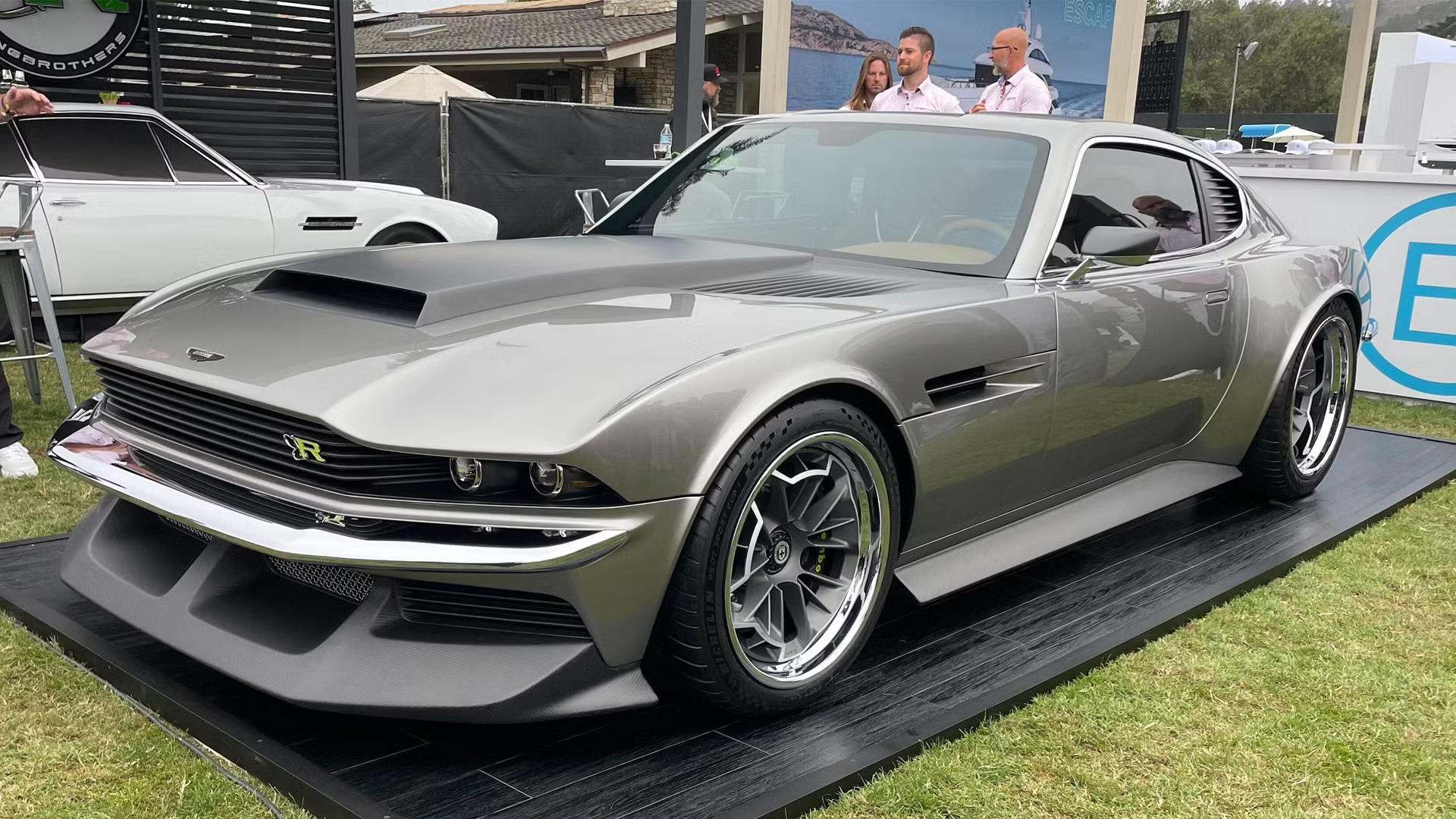
Ringbrothers’ one-off Aston Martin OCTAVIA belongs in the second category. It was not commissioned by EON Productions. It was not built for a pre-title chase, a Q Branch demonstration, or Bond’s private use. Yet one look at it and the connection is immediate. This is a Bond fantasy hiding in plain sight: a 1971 Aston Martin DBS rebuilt as a carbon-fibre, supercharged, Anglo-American grand tourer with a sense of humour and muscular intimidation in its shoulders.
The Bond connection is more playful than literal. OCTAVIA is a nod to Octopussy, the 1983 Roger Moore film, and the car is filled with 007 touches. The valve covers read “Aston Martini.” The engine dipstick is shaped like a martini glass. The interior includes cameras with a touch of Q Branch about them. Even the whole idea feels like something that might have been born halfway between Q Branch and American muscle.
But this is not simply an old Aston with a few Bond jokes added. Ringbrothers have taken a 1971 Aston Martin DBS and transformed it almost completely. The body is carbon fibre. The car is eight inches wider at the front and ten inches wider at the rear. The wheelbase has been stretched by three inches. It has a clamshell bonnet, a reshaped glasshouse, a custom Roadster Shop chassis, an integrated structural roll cage, independent rear suspension, C7 Corvette sway bars, Fox Racing dampers and Brembo brakes.
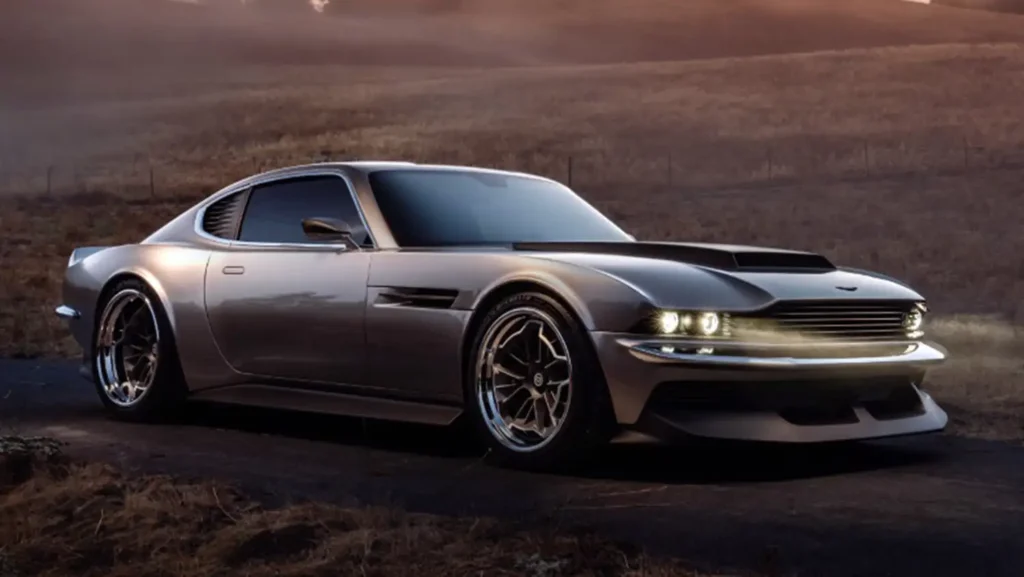
Then there is the engine. Under the bonnet sits a Ford Performance 5.0-litre Coyote V8 paired with a 2.65-litre supercharger and tuned for 805 horsepower in street trim. Power goes to the rear wheels through a six-speed manual gearbox. In other words, OCTAVIA is not merely a DBS with a body kit and a Ford V8. It is a full re-engineering of the car around the idea of an Anglo-American muscle grand tourer.
Ringbrothers co-owner Mike Ring put the formula neatly, describing OCTAVIA as the combination of “the ferocity of American muscle” with “English sophistication.” That is exactly what the car looks like: a William Towns-designed Aston Martin DBS stripped, stretched and beefed up, but not turned into something anonymous. The car remains recognisably Aston Martin while carrying the stance, width and aggression of the American custom world.
That is the headline machine: a one-off, carbon-bodied, 805-horsepower Aston Martin DBS restomod with a Bond title joke and American muscle under the bonnet.
What makes OCTAVIA especially interesting is that the Aston Martin identity has not disappeared beneath the work. Physically, this is an almost completely rebuilt car. But visually, Ringbrothers have preserved enough of the DBS’s grille, long-bonnet proportion, roofline and silhouette for it still to read as an Aston Martin from across the room.
The details reinforce that point. Ringbrothers’ Ryan Fielding points out in the video from Hard Up Garage that OCTAVIA uses 3D-printed stainless-steel parts, including the headlight trim bezels and even the Aston Martin badge on the bonnet. That matters because this is not just a muscular body conversion with a huge engine dropped into it. Ringbrothers have remade the car at the level of jewellery: the brightwork, the badging, the trim, and the small visual cues that tell the eye it is still an Aston Martin.
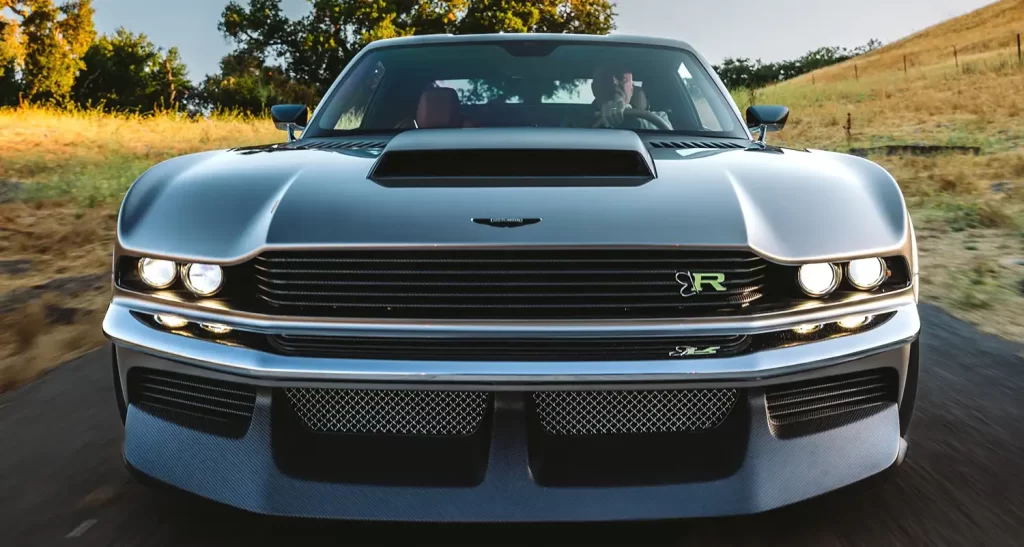
The windscreen tells the same story. According to Fielding, the windshield is original 1971 Aston Martin glass, but it was trimmed down to reshape the opening while keeping the original contours. That is a perfect OCTAVIA detail. The car is not a replica of the DBS, but nor is it a shapeless custom wearing an Aston badge. It keeps the essence, then reworks the proportions around it.
And the DBS was never a delicate shape to begin with.
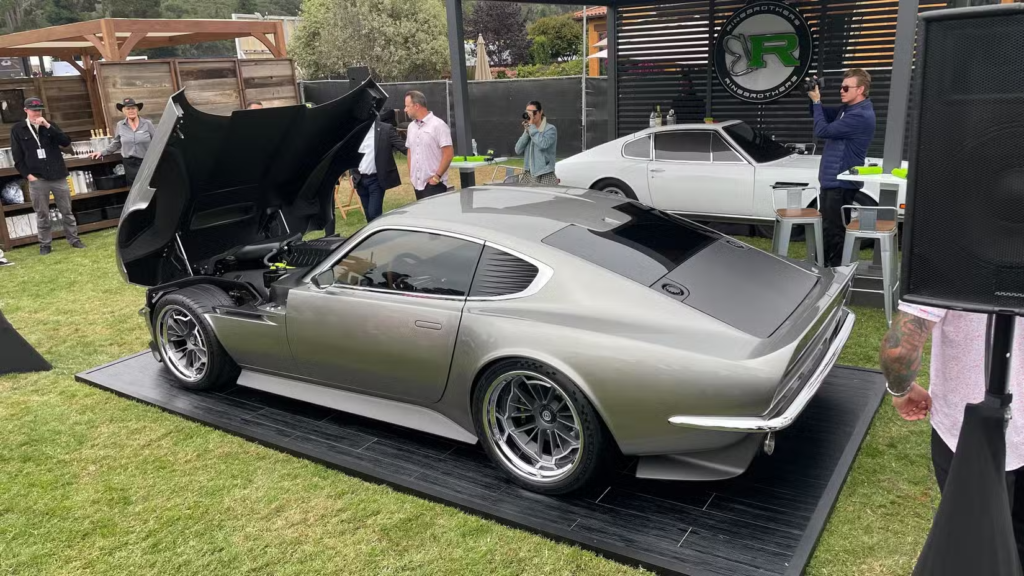
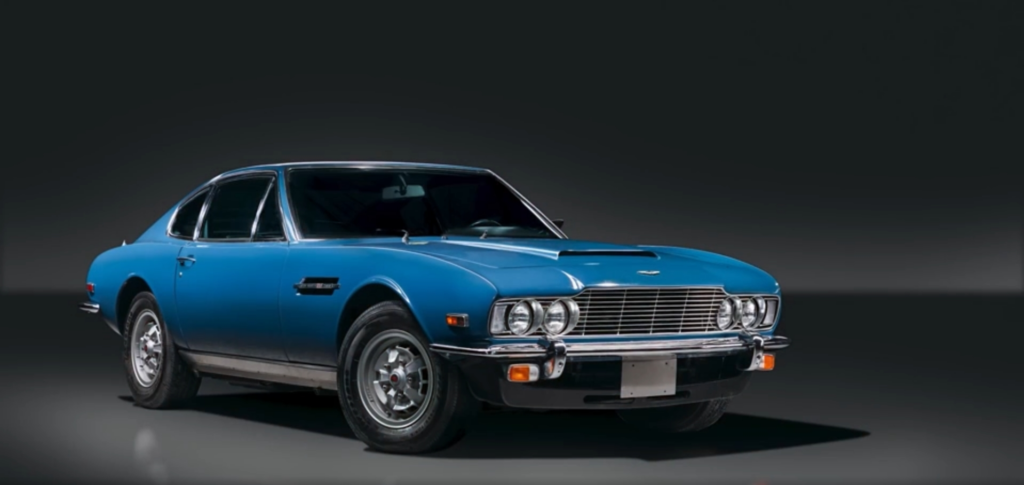
That is crucial to understanding why Ringbrothers were attracted to it. The Ring brothers built their reputation on American muscle cars. Their world is Camaros, Mustangs, Chargers and custom-built V8 monsters — cars defined by stance, width, attitude and power. But if you know anything about the 1969 to early-1970s DBS, you’ll know it is not a fragile British sports car. It was Aston Martin’s answer to the American muscle-car moment: a British grand tourer whose long bonnet, broad stance and rear-quarter muscle carried a clear echo of the 1960s Ford Mustang.
Compared with the DB5, the original DBS was broader, squarer and more muscular. It was Aston Martin entering a new design language at the end of the 1960s: less flowing, less gentlemanly, more angular and more transatlantic. It was still a British grand tourer, but it carried the visual weight of the American power cars of the era.
That is why OCTAVIA makes sense as a Ringbrothers project. They were not taking a delicate Aston Martin and corrupting it with American muscle. They were taking an Aston Martin that already had American muscle in its bones and pushing that idea to its logical extreme.
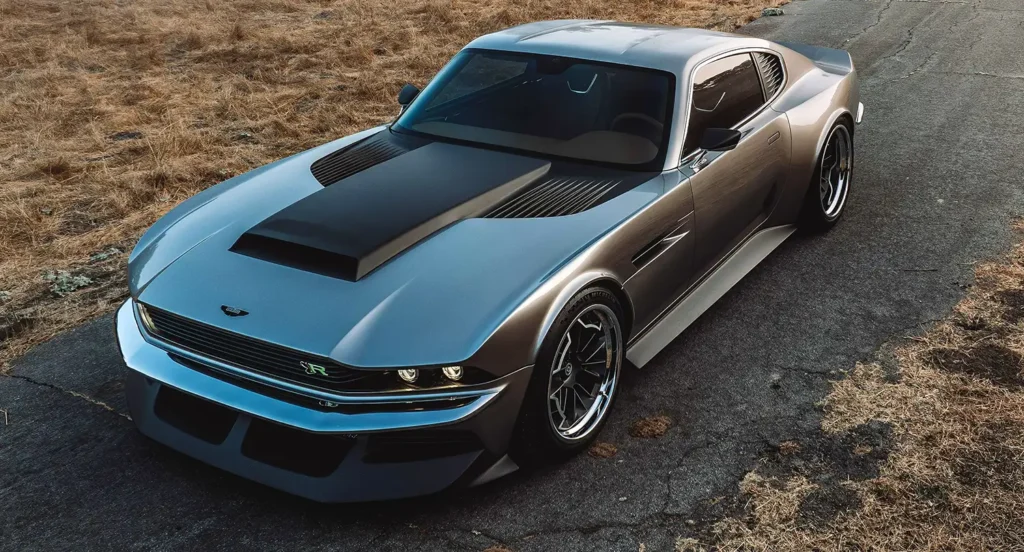
In the Hard Up Garage video, Fielding is introduced as “the master mechanic behind the vision,” and his explanation gets to the heart of the build. Ringbrothers are known for American muscle cars, and the DBS appealed because it was already Aston Martin’s version of that same idea: a British grand tourer shaped by the proportions, stance and attitude of late-1960s American performance cars. Fielding says Ringbrothers were “known for American muscle cars,” which made it exciting to put their spin on an Aston that was itself trying to “emulate an American muscle car.”
That idea unlocks the whole project.
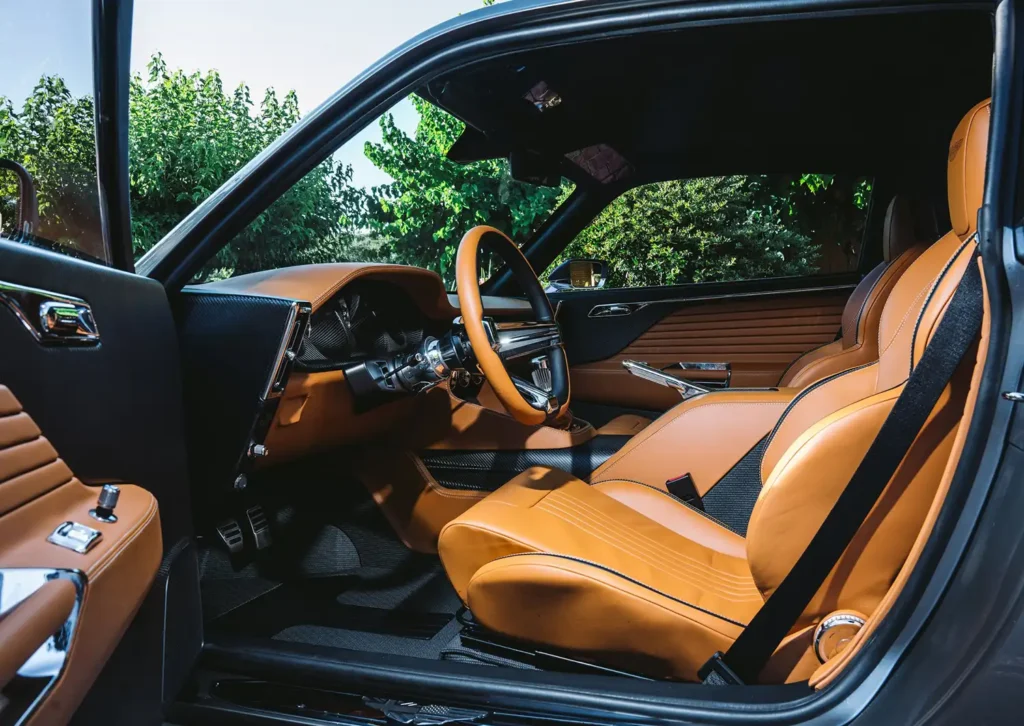
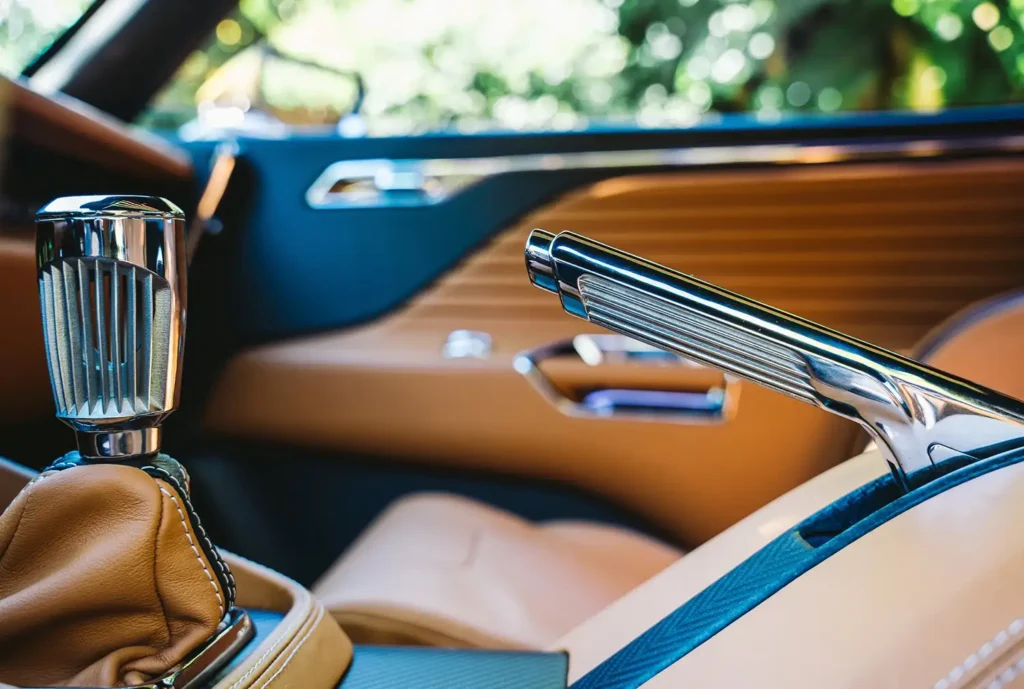
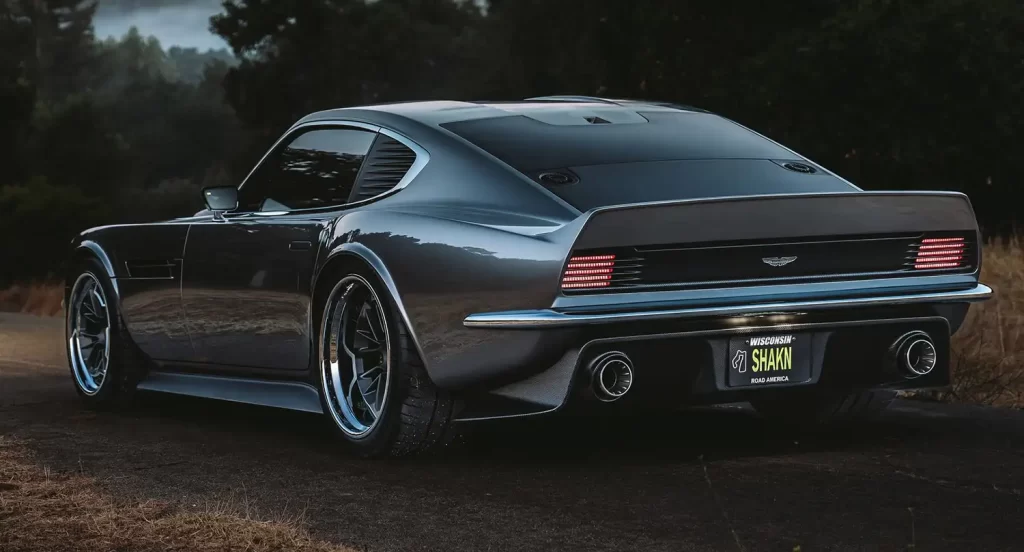
OCTAVIA is not an American muscle car forced onto an Aston Martin shell. It is the American muscle-car influence inside the DBS being drawn out, exaggerated and modernised. That is why the car can be eight inches wider at the front and ten inches wider at the rear without losing its identity. That is why the rear quarter panel can suggest something of a 1969 or 1970 Mustang Mach 1 while the grille, bonnet line and silhouette still announce Aston Martin.
The body was designed by Gary Ragle, with Ringbrothers aiming for what Top Gear describes as “Coke-bottle curvature” through the enlarged front and rear. OCTAVIA does not simply make the DBS wider. It gives the car the swelling, pinched, muscular shape associated with late-1960s and early-1970s performance cars. The rear quarter panel, in particular, has something of a 1969 or 1970 Mustang Mach 1 about it. The echo is there in the rear contour, the rear arch and the way the roofline flows into the top of the rear window, creating a distinctive glasshouse.
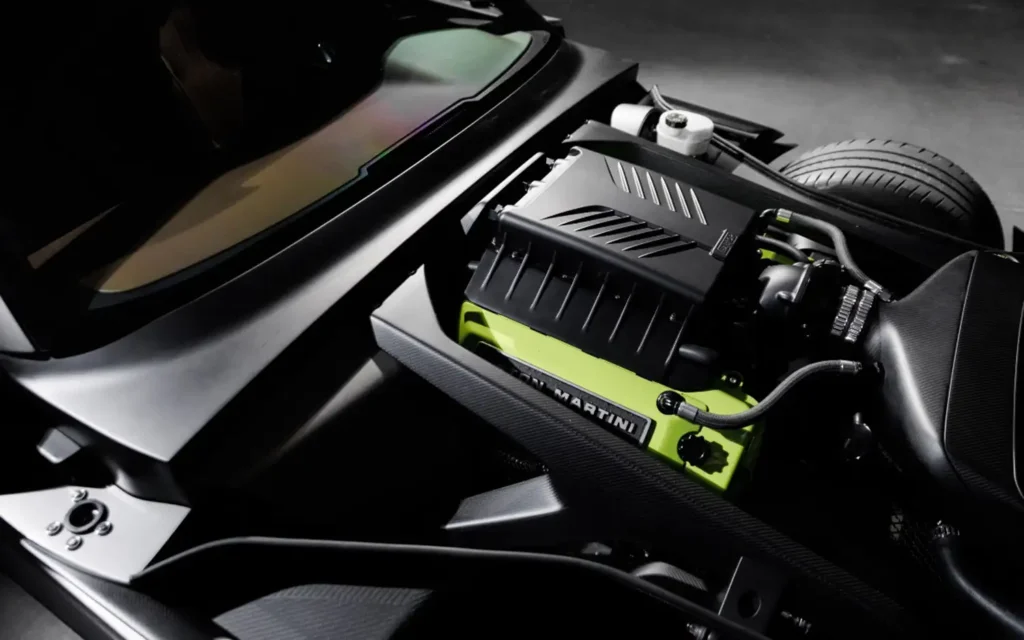
Yet the car never stops looking like an Aston Martin. The grille remains. The long bonnet remains. The slope of the silhouette remains. Ringbrothers have not erased the DBS; they have exaggerated the American muscle-car influence that was already present in the original design.
And that tension is exactly why it feels so Bondian.
The DBS has its own place in the Bond canon. It is not the Aston everyone remembers first. That honour goes to the DB5, the silver gadget car from Goldfinger. The DBS was different. George Lazenby’s Bond drove it in On Her Majesty’s Secret Service, where it became associated not with gadgetry, but with the film’s devastating ending. The DB5 is the fantasy. The Lotus Esprit is the comic-book miracle. The Aston Martin V8 from The Living Daylights is the Cold War weapon. But the DBS is the wound.
OCTAVIA, though, does not treat the DBS as a tragic relic. It turns it into something else entirely. The whole experience is a nod to the fun side of Bond: the martini jokes, the theatricality, the danger, and the absurd confidence of a machine that seems to belong halfway between Q Branch and American muscle.
Ringbrothers may not have built an official Bond car, but they have built something that understands the fun of one. OCTAVIA takes a 1970s Aston Martin DBS, keeps the Aston identity, draws out the American muscle already sitting inside the shape, and turns it into a carbon-fibre, 805-horsepower wink at Bond.
The DB5 will always be the famous one.
But OCTAVIA feels like the DBS finally allowed to misbehave.